






A full polishing range.
From cutting and one-step correction to final finishing.
Specialist chemistry. Expert application.
 QUARTZ99 / CERAMIC BASE COAT
The foundation of your coating system.
A layerable quartz base coat designed for mechanical protection. Pair it with a suitable top coat to create the final finish.
For application by NANOLAB certified installers only.
Four formulas. Extended working time. Find the coating for your finish.
Explore the BEAST family of ceramic coatings.
Find the coating for each exterior surface.
 PPF & VINYLGLOSSProtection for glossy films and wraps.Discover
 MATTE & SATINMATTEProtection that respects the finish.Discover
 GLASSWINDOWSExplore dedicated glass protection.Discover
 WHEEL PROTECTIONWHEELSA dedicated coating for your wheels.Discover
 TRIM PROTECTIONPLASTICProtection for plastic surfaces.Discover
Dedicated care for the surfaces inside.
 LEATHER SURFACESLEATHERDiscover NANOLAB leather protection.Discover PLASTIC SURFACESPLASTICProtection for interior plastic surfaces.Discover TEXTILE SURFACESFABRICExplore the latest fabric formulation.Discover
Spray protection, maintenance and upcoming wash products.
 MAINTENANCEBEAST 365Explore the BEAST maintenance range.Discover
Next in washing, cleaning & care.
Ceramic protection for boats and yachts.
An easy-to-apply ceramic coating with an established track record on boats and yachts around the world.
Results vary with surface preparation, exposure and maintenance.
Read 50 MARINE guides →Explore MARINEProtection for the surfaces you live with.
A look at what we’re developing.
From cutting and one-step correction to final finishing.
A wider range for professional vehicle care.
Taking shape alongside BEAST & MATRIX.
Practical guidance for your next coating project.
Explore all guides →
Use an appearance-focused trial before ceramic coating matte powder-coated furniture, checking sheen, texture, cleaning and repeated handling.
Updated · NANOLAB Knowledge
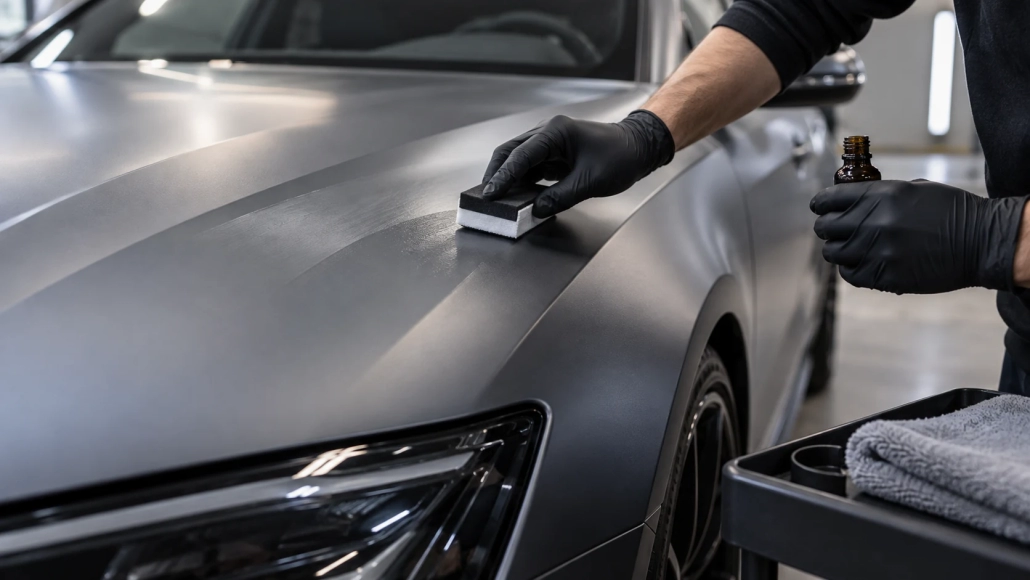
Matte powder-coated furniture is designed to scatter reflections rather than produce a mirror finish. A ceramic coating that makes the surface darker or glossier may conflict with that design. Approval should therefore start with appearance, followed by practical maintenance testing.
Record the furniture maker, colour and finish code. Note whether the surface is smooth matte, fine textured or visibly rough. Inspect rubbing marks and polished-looking areas at handholds before treatment; those existing differences should not be mistaken for a new coating effect.
Ask whether the powder-coating supplier permits the proposed preparation and protective product. Do not transfer a glossy automotive paint approval to a matte furniture finish.
A spare panel from the same production run is preferable to a hidden area with a different coating thickness or texture. Keep part untreated, and label the boundary on the back or in a photograph. Avoid tape on a delicate finish unless its use is permitted.
Inspect the coated sample after the full instructed cure under both diffuse and directional light. Check for sheen changes, darkening and product collected in the texture. A wet application photo is not an acceptance record.
After the coating allows normal use, trial the cleaning task the furniture actually experiences. For a table base, that may mean removing shoe scuffs around an approved area; for a chair frame, ordinary handling marks may be more relevant. Do not invent accelerated wear by using abrasives that would never be part of the care routine.
Record whether the cleaner leaves a visible film and whether the dry appearance remains consistent. A reduction in wiping effort has little value if each cleaning leaves shiny patches.
Exclude joints, adjustment mechanisms, upholstery and functional contact surfaces unless specifically approved. Provide the owner with the exact cleaner and cloth requirements. If the sample changes the intended matte appearance, choose another process or leave the factory finish under its original care routine. Compatibility includes the design outcome, not just whether a liquid can be spread over the metal.
For your exact finish and service conditions, ask NANOLAB about coating suitability and consult the current product documentation.
Check a satin finish for material compatibility and appearance change before applying a coating across the vehicle.
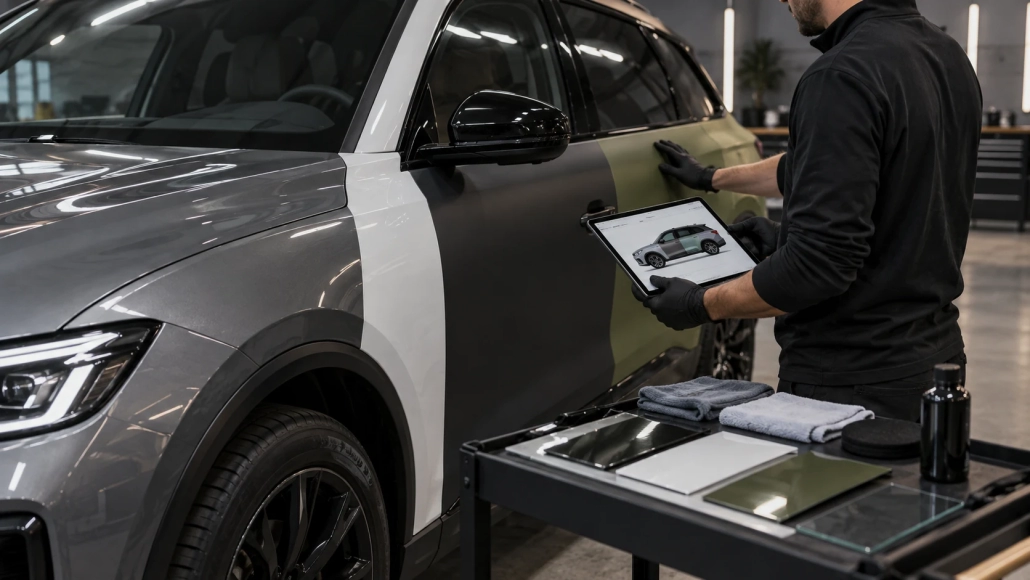
Plan a nano coating trial for decorative chrome furniture, separating visible surfaces from moving parts, upholstery and functional contact areas.
Evaluate ceramic coating on powder-coated gates and railings, separating intact finish care from rust repair, moving hardware and outdoor maintenance.
 Nano Coating Lacquered Brass: Treat the Outer Finish