






A full polishing range.
From cutting and one-step correction to final finishing.
Specialist chemistry. Expert application.
 QUARTZ99 / CERAMIC BASE COAT
The foundation of your coating system.
A layerable quartz base coat designed for mechanical protection. Pair it with a suitable top coat to create the final finish.
For application by NANOLAB certified installers only.
Four formulas. Extended working time. Find the coating for your finish.
Explore the BEAST family of ceramic coatings.
Find the coating for each exterior surface.
 PPF & VINYLGLOSSProtection for glossy films and wraps.Discover
 MATTE & SATINMATTEProtection that respects the finish.Discover
 GLASSWINDOWSExplore dedicated glass protection.Discover
 WHEEL PROTECTIONWHEELSA dedicated coating for your wheels.Discover
 TRIM PROTECTIONPLASTICProtection for plastic surfaces.Discover
Dedicated care for the surfaces inside.
 LEATHER SURFACESLEATHERDiscover NANOLAB leather protection.Discover PLASTIC SURFACESPLASTICProtection for interior plastic surfaces.Discover TEXTILE SURFACESFABRICExplore the latest fabric formulation.Discover
Spray protection, maintenance and upcoming wash products.
 MAINTENANCEBEAST 365Explore the BEAST maintenance range.Discover
Next in washing, cleaning & care.
Ceramic protection for boats and yachts.
An easy-to-apply ceramic coating with an established track record on boats and yachts around the world.
Results vary with surface preparation, exposure and maintenance.
Read 50 MARINE guides →Explore MARINEProtection for the surfaces you live with.
A look at what we’re developing.
From cutting and one-step correction to final finishing.
A wider range for professional vehicle care.
Taking shape alongside BEAST & MATRIX.
Practical guidance for your next coating project.
Explore all guides →
Use an untreated clean reference surface to check whether rinse water leaves visible residue before blaming a ceramic coating for every drying mark.
Updated · NANOLAB Knowledge

When a freshly rinsed coated surface dries with marks, the rinse water itself is one possible contributor. A blank drying comparison helps isolate that question without immediately changing the coating or cleaning chemistry.
Use clean reference surfaces of the same suitable material and finish. Confirm that preparation has not left visible residue. Keep one unexposed reference and apply defined equal quantities of the waters being compared to the others.
Use clean containers and a reproducible drying arrangement. Protect the samples from dust and do not heat them beyond conditions appropriate to the material or intended test. Label the water source and collection time.
| Observation | What it suggests |
|---|---|
| Only one water leaves a visible mark | Investigate that water and its handling path |
| All exposed samples show similar marks | Review water, preparation and environment |
| Unexposed reference changes too | Investigate background contamination |
A visible residue does not identify its chemistry. An apparently clean blank does not prove the water contains no dissolved material. The sensitivity of the visual method depends on the surface, volume, lighting and drying pattern.
If the blank indicates a water contribution, repeat a small controlled rinse on the coated surface under its care instructions. Avoid repeatedly allowing suspect water to dry on valuable paint simply to strengthen the demonstration.
The useful outcome is a narrower investigation: water supply, downstream contamination, cleaning residue or surface condition. That is more efficient than escalating to polishing before checking what the final rinse actually leaves behind.
Ask NANOLAB about your surface and intended use. For application and care, use the current instructions for the exact product.
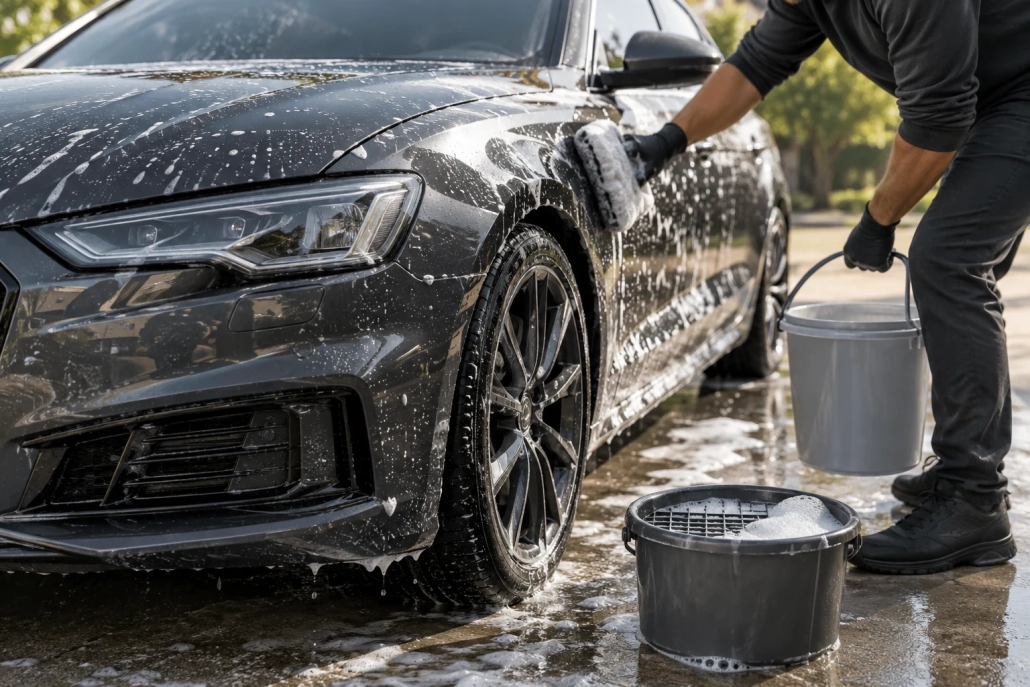
Build a gentle wash routine that removes loose grit before contact, keeps wheel tools separate and ends with careful rinsing and drying.
Compare first-draw and flushed water samples to investigate contamination in tanks, hoses and downstream rinse equipment.
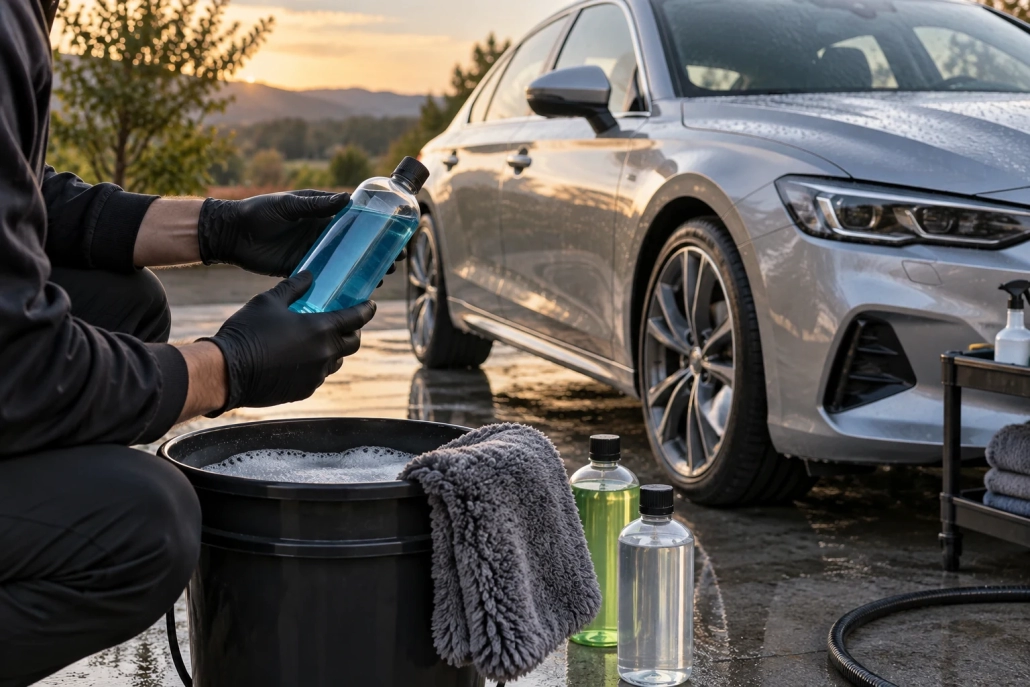
Coordinate softener regeneration and detailing demand so the team knows which water is available during and after the equipment’s service cycle.
 Scheduling Water-Softener Regeneration around a Detailing Shift