






A full polishing range.
From cutting and one-step correction to final finishing.
Specialist chemistry. Expert application.
 QUARTZ99 / CERAMIC BASE COAT
The foundation of your coating system.
A layerable quartz base coat designed for mechanical protection. Pair it with a suitable top coat to create the final finish.
For application by NANOLAB certified installers only.
Four formulas. Extended working time. Find the coating for your finish.
Explore the BEAST family of ceramic coatings.
Find the coating for each exterior surface.
 PPF & VINYLGLOSSProtection for glossy films and wraps.Discover
 MATTE & SATINMATTEProtection that respects the finish.Discover
 GLASSWINDOWSExplore dedicated glass protection.Discover
 WHEEL PROTECTIONWHEELSA dedicated coating for your wheels.Discover
 TRIM PROTECTIONPLASTICProtection for plastic surfaces.Discover
Dedicated care for the surfaces inside.
 LEATHER SURFACESLEATHERDiscover NANOLAB leather protection.Discover PLASTIC SURFACESPLASTICProtection for interior plastic surfaces.Discover TEXTILE SURFACESFABRICExplore the latest fabric formulation.Discover
Spray protection, maintenance and upcoming wash products.
 MAINTENANCEBEAST 365Explore the BEAST maintenance range.Discover
Next in washing, cleaning & care.
Ceramic protection for boats and yachts.
An easy-to-apply ceramic coating with an established track record on boats and yachts around the world.
Results vary with surface preparation, exposure and maintenance.
Read 50 MARINE guides →Explore MARINEProtection for the surfaces you live with.
A look at what we’re developing.
From cutting and one-step correction to final finishing.
A wider range for professional vehicle care.
Taking shape alongside BEAST & MATRIX.
Practical guidance for your next coating project.
Explore all guides →
Coordinate yacht and boat cleaning across contractors with a shared surface map, product list and handover record that prevents conflicting maintenance.
Updated · NANOLAB Knowledge
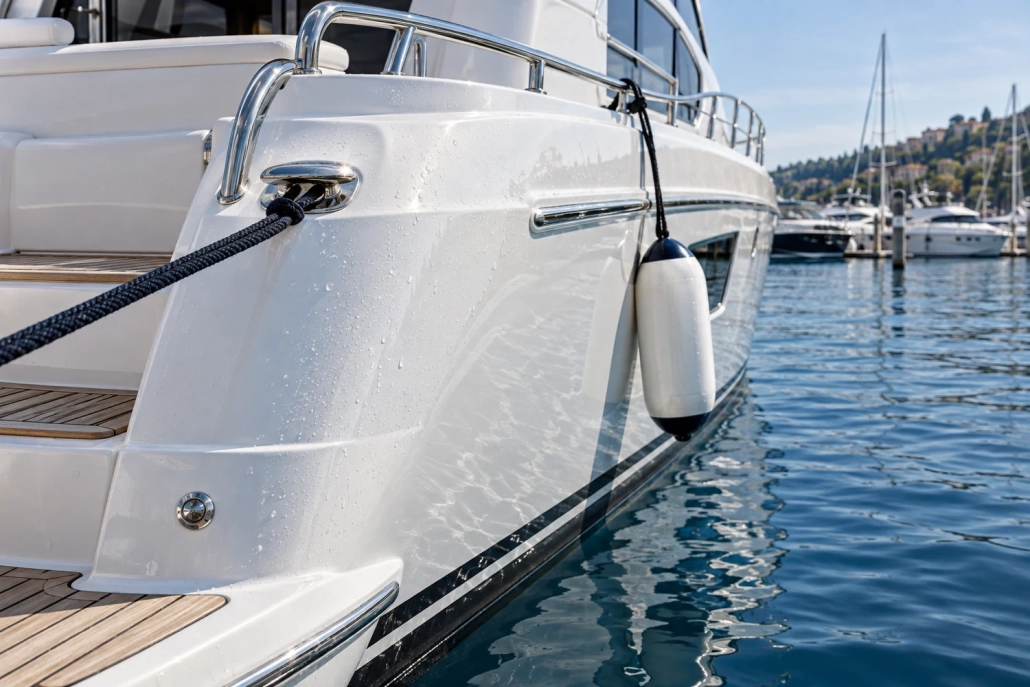
A boat may be cleaned by a marina team during the week and a detailing contractor before an event. Each can follow a reasonable routine while the combined sequence creates an unplanned treatment system. Shared records are needed at the points where one contractor’s work becomes the other’s starting surface.
The coordinator should hold the current surface map, coating records and approved care information. This can be the owner, manager or designated technical contact. The role is to resolve conflicting instructions before work, not to let every contractor improvise a compromise on the vessel.
Map painted surfaces, gelcoat, metal, glazing, plastics and excluded functional zones. Record local repairs and recent coating applications with their relevant return-to-service conditions.
| Record | Why it matters |
|---|---|
| Exact product and version | A generic “boat cleaner” description is insufficient |
| Intended surface | Prevents a method spreading to another material |
| Supported use conditions | Keeps dilution and contact method consistent |
| Maintenance topper or dressing | Explains changes in appearance and wetting |
| Work completed and exceptions | Defines the next contractor’s starting condition |
Specify what “ready” means: the agreed cleaning step completed, residue addressed, surfaces inspected and outstanding issues marked. Do not hand over an unresolved mark with only an instruction to “finish this area.” State what was tried and the observed result so the next team does not unknowingly repeat or intensify the same treatment.
Keep products and tools segregated when transfer between zones would create a compatibility problem. Avoid leaving unlabelled prepared mixtures for another crew. The receiving team needs the approved instructions, not an unidentified container.
If the coating care guidance and a substrate supplier’s instruction appear to conflict, pause that operation and obtain clarification for the exact combination. Do not assume a newer email automatically replaces every earlier restriction. Keep the resolution with the surface map so it is available to both contractors.
For example, one crew may apply a maintenance spray while the other is trying to assess the underlying coating’s water behaviour. Without a shared log, the second team may attribute the spray’s effect to the original coating. The fix is to align the assessment sequence and disclose the added product.
At completion, photograph relevant areas, record exceptions and identify the next activity that could affect them. A repair, fender installation or event dressing may change the maintenance boundary soon afterward. The coordinator should circulate a concise update rather than requiring each crew to read an entire archive.
Good coordination makes routine care predictable. It also makes any later problem easier to investigate because the combined sequence is visible, instead of two contractors each describing only their own part.
Discuss your surface and intended use with NANOLAB. Follow the current instructions for the exact product when planning application and care.

Identify contamination, access and sequencing conflicts with adjacent trades.
Teach crew to follow product-specific care and recognize when an issue needs technical review.

 Measuring Haze and Gloss Together on Transparent Coated Samples