






A full polishing range.
From cutting and one-step correction to final finishing.
Specialist chemistry. Expert application.
 QUARTZ99 / CERAMIC BASE COAT
The foundation of your coating system.
A layerable quartz base coat designed for mechanical protection. Pair it with a suitable top coat to create the final finish.
For application by NANOLAB certified installers only.
Four formulas. Extended working time. Find the coating for your finish.
Explore the BEAST family of ceramic coatings.
Find the coating for each exterior surface.
 PPF & VINYLGLOSSProtection for glossy films and wraps.Discover
 MATTE & SATINMATTEProtection that respects the finish.Discover
 GLASSWINDOWSExplore dedicated glass protection.Discover
 WHEEL PROTECTIONWHEELSA dedicated coating for your wheels.Discover
 TRIM PROTECTIONPLASTICProtection for plastic surfaces.Discover
Dedicated care for the surfaces inside.
 LEATHER SURFACESLEATHERDiscover NANOLAB leather protection.Discover PLASTIC SURFACESPLASTICProtection for interior plastic surfaces.Discover TEXTILE SURFACESFABRICExplore the latest fabric formulation.Discover
Spray protection, maintenance and upcoming wash products.
 MAINTENANCEBEAST 365Explore the BEAST maintenance range.Discover
Next in washing, cleaning & care.
Ceramic protection for boats and yachts.
An easy-to-apply ceramic coating with an established track record on boats and yachts around the world.
Results vary with surface preparation, exposure and maintenance.
Read 50 MARINE guides →Explore MARINEProtection for the surfaces you live with.
A look at what we’re developing.
From cutting and one-step correction to final finishing.
A wider range for professional vehicle care.
Taking shape alongside BEAST & MATRIX.
Practical guidance for your next coating project.
Explore all guides →
Use a laboratory neutralisation curve to investigate acid-base behaviour beyond a single pH reading, while keeping surface compatibility as a separate test.
Updated · NANOLAB Knowledge
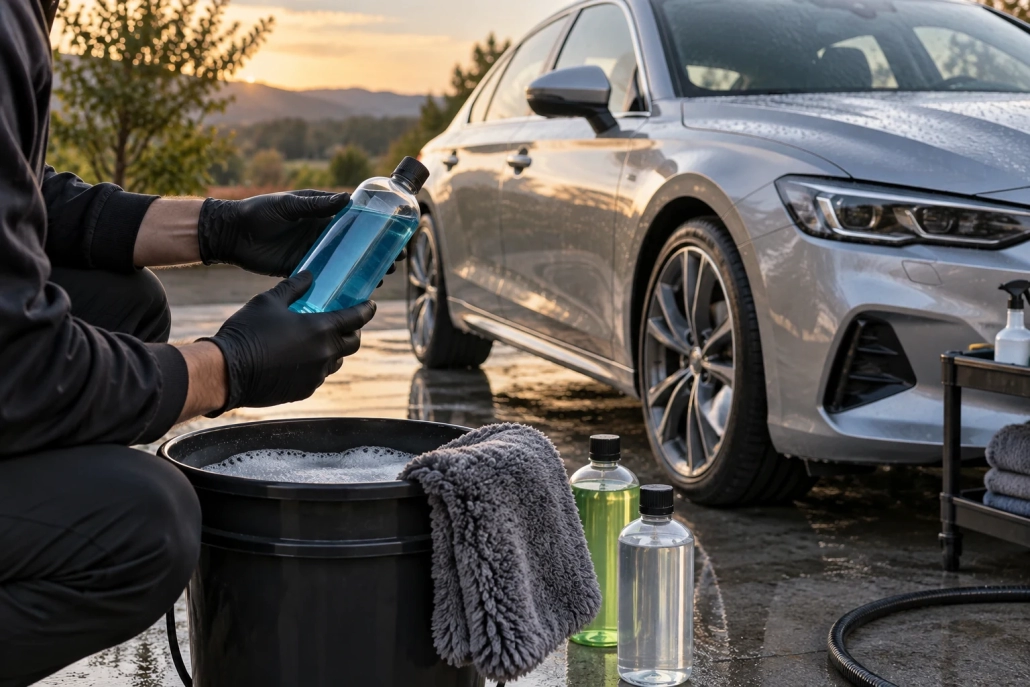
Two aqueous cleaners can have similar pH readings yet respond differently when acid or base is added. A suitable laboratory titration can describe that response more fully than one initial pH value.
Decide whether the aim is comparison of batches, investigation of neutralisation demand or measurement of a defined acidity or alkalinity parameter. The laboratory should choose a method suited to the formulation and solvent system.
Record sample amount, dilution, titrant identity and concentration, electrode method, temperature and endpoint definition. Compare curves on a consistent basis. An equal titrant volume does not mean an equal response if sample masses or titrant strengths differ.
Different formulations can produce different curve shapes; a simple strong-acid model should not be assumed for every cleaner.
The result helps characterise acid-base behaviour but does not establish compatibility with a coating, metal or plastic. That requires a relevant exposure test. Titration belongs in a controlled laboratory procedure, not a recommendation to neutralise cleaning products by mixing them at the worksite. Keep analytical findings and application approval as separate decisions.
The sources below support the stated concepts or describe their own methods. The worked scenarios are editorial examples, not NANOLAB test results.
Ask NANOLAB about your surface and intended use. For application and care, use the current instructions for the exact product.

Use clear checkpoints before application, after levelling and at handover to make coating work consistent and traceable.
A cleaner suitable for one exterior surface may have restrictions on another. The coating does not remove the underlying material's care requirements.
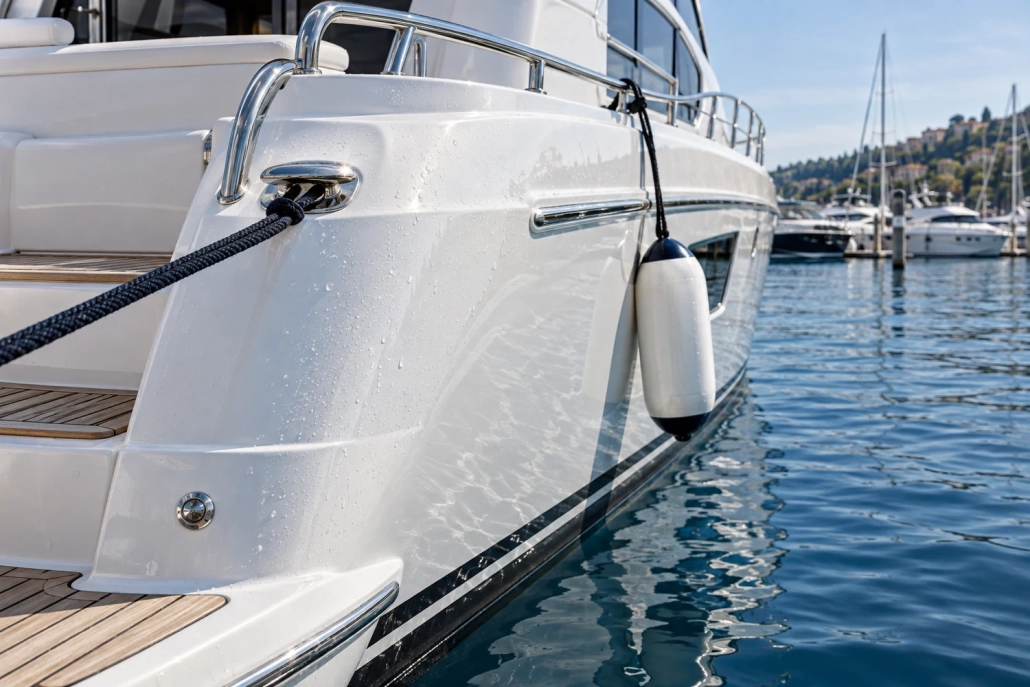
Distinguish organic surface films, mineral deposits and mixed contamination when selecting an approved cleaning approach for coated marine surfaces.

 Marine Organic Films and Mineral Deposits: Separate the Cleaning Questions