






A full polishing range.
From cutting and one-step correction to final finishing.
Specialist chemistry. Expert application.
 QUARTZ99 / CERAMIC BASE COAT
The foundation of your coating system.
A layerable quartz base coat designed for mechanical protection. Pair it with a suitable top coat to create the final finish.
For application by NANOLAB certified installers only.
Four formulas. Extended working time. Find the coating for your finish.
Explore the BEAST family of ceramic coatings.
Find the coating for each exterior surface.
 PPF & VINYLGLOSSProtection for glossy films and wraps.Discover
 MATTE & SATINMATTEProtection that respects the finish.Discover
 GLASSWINDOWSExplore dedicated glass protection.Discover
 WHEEL PROTECTIONWHEELSA dedicated coating for your wheels.Discover
 TRIM PROTECTIONPLASTICProtection for plastic surfaces.Discover
Dedicated care for the surfaces inside.
 LEATHER SURFACESLEATHERDiscover NANOLAB leather protection.Discover PLASTIC SURFACESPLASTICProtection for interior plastic surfaces.Discover TEXTILE SURFACESFABRICExplore the latest fabric formulation.Discover
Spray protection, maintenance and upcoming wash products.
 MAINTENANCEBEAST 365Explore the BEAST maintenance range.Discover
Next in washing, cleaning & care.
Ceramic protection for boats and yachts.
An easy-to-apply ceramic coating with an established track record on boats and yachts around the world.
Results vary with surface preparation, exposure and maintenance.
Read 50 MARINE guides →Explore MARINEProtection for the surfaces you live with.
A look at what we’re developing.
From cutting and one-step correction to final finishing.
A wider range for professional vehicle care.
Taking shape alongside BEAST & MATRIX.
Practical guidance for your next coating project.
Explore all guides →
Investigate oily runoff from badges and recesses before coating nearby paint, using the surface history and a controlled preparation sequence.
Updated · NANOLAB Knowledge

A broad panel can be clean while a badge recess retains dressing, wax or other material. Later runoff can recontaminate the paint and create a local application or appearance problem.
Ask about recent dressings, adhesive work and cleaning. Inspect the recess and the area below it before preparation. Note whether marks recur after rinsing, door movement or drying.
Clean accessible areas with tools and chemistry appropriate to the finish and coating system. Avoid forcing brushes behind fragile trim or flooding a recess with solvent. Badge removal should be part of an agreed service scope performed by someone competent to do it.
| Stage | Check |
|---|---|
| Initial preparation | Visible residue and local contamination |
| After supported drying | Delayed runoff or trapped liquid |
| Before coating | Accepted clean state around the recess |
If the same narrow trail returns, repeatedly wiping only the lower panel may not resolve the source. Reassess the recess and determine whether further access or specialist attention is required.
If a small area cannot be prepared reliably within the agreed scope, document it and discuss the appropriate next step. Do not claim uniform treatment across an area whose preparation remained uncertain.
The practical aim is to prevent hidden material from entering a freshly prepared section. A few minutes spent checking delayed runoff can be more valuable than correcting an unexplained local coating defect after the vehicle is otherwise complete.
Ask NANOLAB about your surface and intended use. For application and care, use the current instructions for the exact product.
Use clear checkpoints before application, after levelling and at handover to make coating work consistent and traceable.
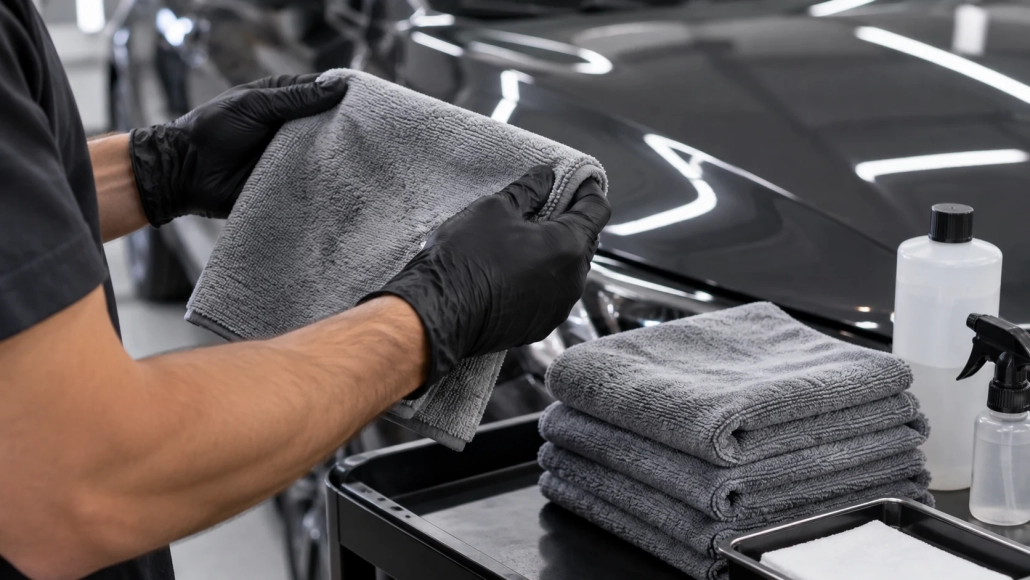
Inspect preparation towels for embedded grit, previous product and laundry residue before they touch paint ready for ceramic coating.
Define vehicle-specific exclusions around cameras, sensors and optical areas before applying any aftermarket treatment to automotive glass.
 Coating Automotive Glass near Cameras and Sensors: Define the Exclusion Are...