






A full polishing range.
From cutting and one-step correction to final finishing.
Specialist chemistry. Expert application.
 QUARTZ99 / CERAMIC BASE COAT
The foundation of your coating system.
A layerable quartz base coat designed for mechanical protection. Pair it with a suitable top coat to create the final finish.
For application by NANOLAB certified installers only.
Four formulas. Extended working time. Find the coating for your finish.
Explore the BEAST family of ceramic coatings.
Find the coating for each exterior surface.
 PPF & VINYLGLOSSProtection for glossy films and wraps.Discover
 MATTE & SATINMATTEProtection that respects the finish.Discover
 GLASSWINDOWSExplore dedicated glass protection.Discover
 WHEEL PROTECTIONWHEELSA dedicated coating for your wheels.Discover
 TRIM PROTECTIONPLASTICProtection for plastic surfaces.Discover
Dedicated care for the surfaces inside.
 LEATHER SURFACESLEATHERDiscover NANOLAB leather protection.Discover PLASTIC SURFACESPLASTICProtection for interior plastic surfaces.Discover TEXTILE SURFACESFABRICExplore the latest fabric formulation.Discover
Spray protection, maintenance and upcoming wash products.
 MAINTENANCEBEAST 365Explore the BEAST maintenance range.Discover
Next in washing, cleaning & care.
Ceramic protection for boats and yachts.
An easy-to-apply ceramic coating with an established track record on boats and yachts around the world.
Results vary with surface preparation, exposure and maintenance.
Read 50 MARINE guides →Explore MARINEProtection for the surfaces you live with.
A look at what we’re developing.
From cutting and one-step correction to final finishing.
A wider range for professional vehicle care.
Taking shape alongside BEAST & MATRIX.
Practical guidance for your next coating project.
Explore all guides →
Investigate persistent glass deposits with the right water analysis instead of assuming that a hardness value identifies every mineral-related mark.
Updated · NANOLAB Knowledge
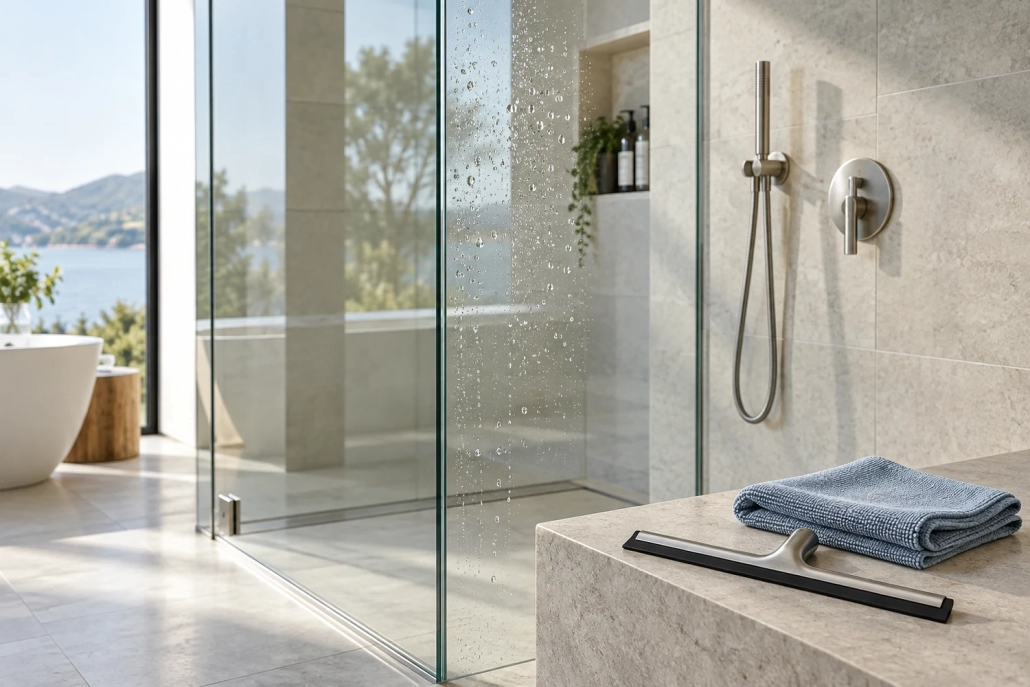
A hardness result is useful, but it does not identify every substance that can contribute to deposits. When glass marks persist despite an appropriate routine, avoid diagnosing their composition from appearance or hardness alone.
Record where the marks form, the water source, whether they change while wet, and the response to supported cleaning. Distinguish deposits on the surface from an altered surface where possible through appropriate inspection. Do not label every persistent mark as silica without evidence.
Provide the water and maintenance history to a competent water-analysis or surface-analysis provider. Hach treats silica as a separate water-analysis parameter. The relevant sampling and analytical method depend on the question, so obtain instructions before collecting a specimen.
| Information | Why it helps |
|---|---|
| Source and treatment equipment | Defines the likely exposure route |
| Deposit location | Reveals splash, pooling or drying patterns |
| Previous cleaners | Shows additional chemistry and interventions |
A cleaner that removes one mineral deposit may be unsuitable for another material in the shower assembly or for the coating. Follow product-specific compatibility guidance and use a limited assessment before extending treatment.
If repeated supported cleaning produces no improvement, stop and reassess. More concentration or longer contact is not a reliable substitute for identifying the problem.
Once the exposure is understood, review water treatment, drying practice and the actual cleaning routine. A coating can be part of a maintenance system, but a deposit diagnosis should address the water and use conditions that repeatedly create the problem.
The sources below support the stated concepts or describe their own methods. The worked scenarios are editorial examples, not NANOLAB test results.
Discuss a shower-glass coating project. For application and care, use the current instructions for the exact product.

Build a gentle wash routine that removes loose grit before contact, keeps wheel tools separate and ends with careful rinsing and drying.
A cloudy mark can be material sitting on the glass or a change in the glass surface itself.
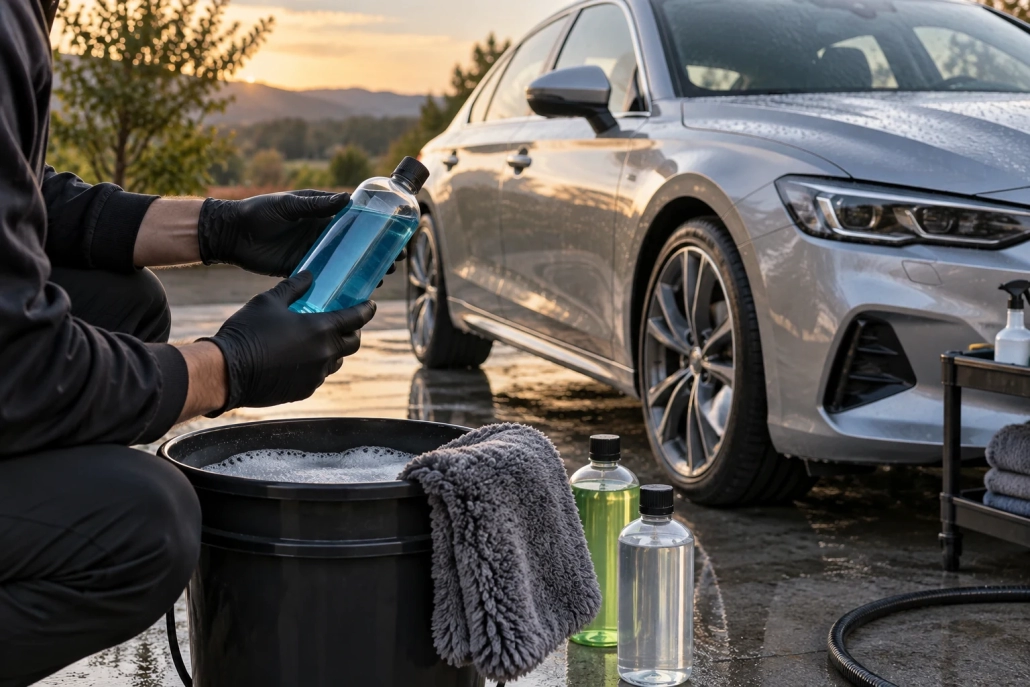
Evaluate chelating ingredients at the shampoo’s working dilution and actual water conditions instead of treating an ingredient name as a performance guarantee.
 Chelating Ingredients in Shampoo: Capacity Matters as Well as Presence