






A full polishing range.
From cutting and one-step correction to final finishing.
Specialist chemistry. Expert application.
 QUARTZ99 / CERAMIC BASE COAT
The foundation of your coating system.
A layerable quartz base coat designed for mechanical protection. Pair it with a suitable top coat to create the final finish.
For application by NANOLAB certified installers only.
Four formulas. Extended working time. Find the coating for your finish.
Explore the BEAST family of ceramic coatings.
Find the coating for each exterior surface.
 PPF & VINYLGLOSSProtection for glossy films and wraps.Discover
 MATTE & SATINMATTEProtection that respects the finish.Discover
 GLASSWINDOWSExplore dedicated glass protection.Discover
 WHEEL PROTECTIONWHEELSA dedicated coating for your wheels.Discover
 TRIM PROTECTIONPLASTICProtection for plastic surfaces.Discover
Dedicated care for the surfaces inside.
 LEATHER SURFACESLEATHERDiscover NANOLAB leather protection.Discover PLASTIC SURFACESPLASTICProtection for interior plastic surfaces.Discover TEXTILE SURFACESFABRICExplore the latest fabric formulation.Discover
Spray protection, maintenance and upcoming wash products.
 MAINTENANCEBEAST 365Explore the BEAST maintenance range.Discover
Next in washing, cleaning & care.
Ceramic protection for boats and yachts.
An easy-to-apply ceramic coating with an established track record on boats and yachts around the world.
Results vary with surface preparation, exposure and maintenance.
Read 50 MARINE guides →Explore MARINEProtection for the surfaces you live with.
A look at what we’re developing.
From cutting and one-step correction to final finishing.
A wider range for professional vehicle care.
Taking shape alongside BEAST & MATRIX.
Practical guidance for your next coating project.
Explore all guides →
Compare municipal water information with samples from the actual wash nozzle before assigning a spotting problem to the public supply.
Updated · NANOLAB Knowledge
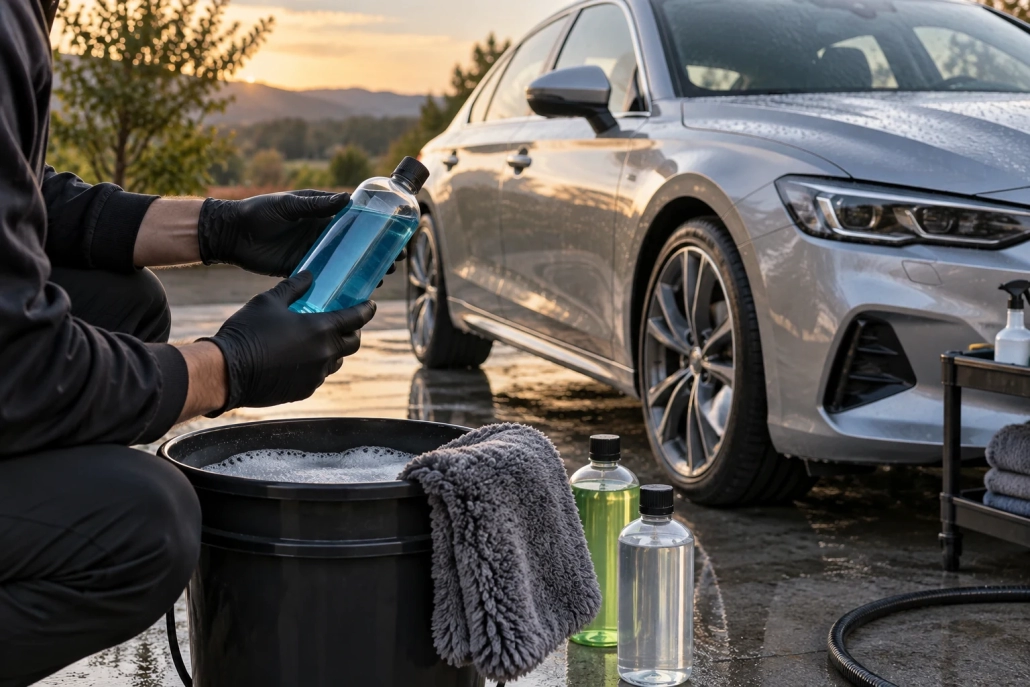
A municipal water report describes its stated sampling programme. The water reaching a detailing nozzle has also passed through the building, treatment equipment, storage and hoses. Use the report as context, then investigate the actual point of use.
Check the report date, sampling area and whether a value is an average, range or individual result. Keep hardness, alkalinity and conductivity in separate fields. A result expressed as calcium-carbonate equivalent is not automatically interchangeable with another property using similar units.
Draw a simple sequence from incoming supply through the softener or filtration system, storage tank, hose and outlet. Collect samples according to a suitable documented procedure, including any required flushing. Record which treatment equipment was operating.
| Sample | Question |
|---|---|
| Incoming supply | What entered the premises? |
| After treatment | What changed across the equipment? |
| At the nozzle | What reached the vehicle? |
If the incoming and treated samples are consistent but the nozzle sample differs, inspect the downstream path before replacing the treatment system. Conversely, a public report from another period does not invalidate a properly obtained current sample.
Repeat a controlled rinse-and-dry observation using the relevant water sources and the same clean reference surface. Keep cleaning chemistry and drying conditions constant. Water analysis and surface appearance provide complementary evidence; neither alone identifies every cause of a mark.
The result should be a traceable sampling record and a targeted next action, not a broad claim that the city’s water is good or bad for all coatings.
Ask NANOLAB about your surface and intended use. For application and care, use the current instructions for the exact product.
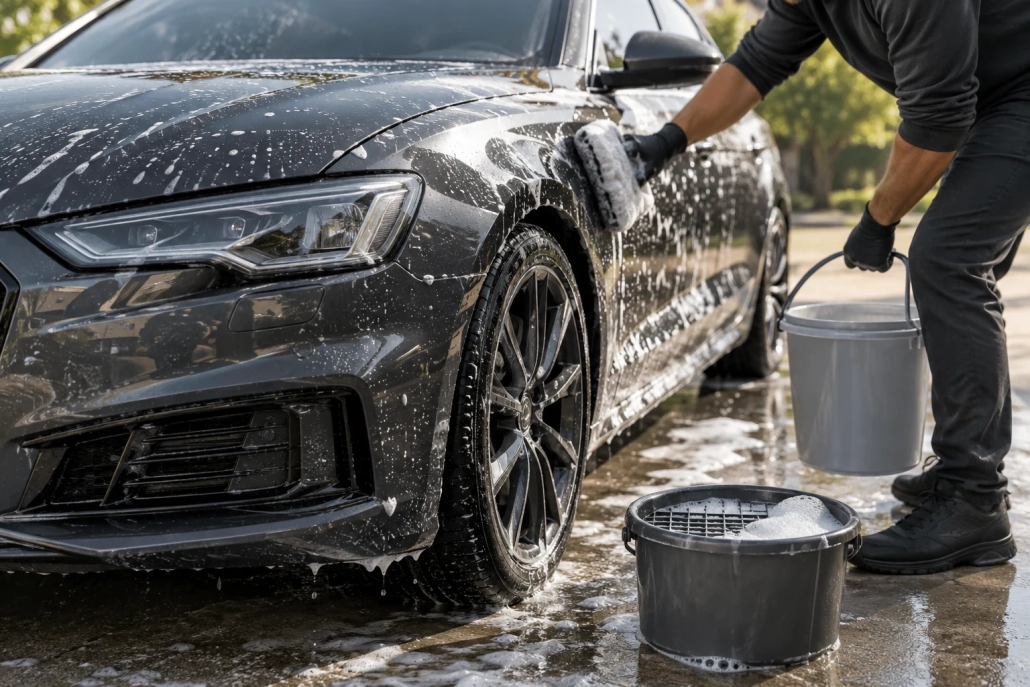
Build a gentle wash routine that removes loose grit before contact, keeps wheel tools separate and ends with careful rinsing and drying.
Consider panel temperature, cleaning instructions and rapid drying when choosing water conditions for washing a ceramic-coated vehicle.
Check for conductivity-probe carryover when switching from high-salt water to low-conductivity rinse samples during detailing-water checks.

 Conductivity Probe Carryover after a Salty Sample: Verify the Blank