






A full polishing range.
From cutting and one-step correction to final finishing.
Specialist chemistry. Expert application.
 QUARTZ99 / CERAMIC BASE COAT
The foundation of your coating system.
A layerable quartz base coat designed for mechanical protection. Pair it with a suitable top coat to create the final finish.
For application by NANOLAB certified installers only.
Four formulas. Extended working time. Find the coating for your finish.
Explore the BEAST family of ceramic coatings.
Find the coating for each exterior surface.
 PPF & VINYLGLOSSProtection for glossy films and wraps.Discover
 MATTE & SATINMATTEProtection that respects the finish.Discover
 GLASSWINDOWSExplore dedicated glass protection.Discover
 WHEEL PROTECTIONWHEELSA dedicated coating for your wheels.Discover
 TRIM PROTECTIONPLASTICProtection for plastic surfaces.Discover
Dedicated care for the surfaces inside.
 LEATHER SURFACESLEATHERDiscover NANOLAB leather protection.Discover PLASTIC SURFACESPLASTICProtection for interior plastic surfaces.Discover TEXTILE SURFACESFABRICExplore the latest fabric formulation.Discover
Spray protection, maintenance and upcoming wash products.
 MAINTENANCEBEAST 365Explore the BEAST maintenance range.Discover
Next in washing, cleaning & care.
Ceramic protection for boats and yachts.
An easy-to-apply ceramic coating with an established track record on boats and yachts around the world.
Results vary with surface preparation, exposure and maintenance.
Read 50 MARINE guides →Explore MARINEProtection for the surfaces you live with.
A look at what we’re developing.
From cutting and one-step correction to final finishing.
A wider range for professional vehicle care.
Taking shape alongside BEAST & MATRIX.
Practical guidance for your next coating project.
Explore all guides →
Map residue, water behaviour, physical marks and vulnerable interfaces after an automatic wash before deciding what a coated car needs.
Updated · NANOLAB Knowledge

A coated car can leave an automatic wash with several different issues at once. Residue, altered water behaviour, physical marks and damage around film edges require different responses. A damage-and-residue map prevents one observation from becoming a diagnosis for the entire vehicle.
| Category | What to document |
|---|---|
| Surface residue | Smears, streaks and deposits after drying |
| Water behaviour | Location and inspection conditions |
| Physical appearance | Scratches, haze or other visible changes |
| Interfaces | Film edges, trim, seals and fittings |
Photograph the vehicle before applying another protection product. Note the wash programme, any wax or drying stage and when the previous accepted inspection occurred. Avoid assuming all newly noticed marks were created by that single wash.
Use a compatible hand-wash process where the surface condition allows it, followed by careful drying. Inspect the same mapped locations. If residue disappears while scratches remain, the two observations need separate conclusions.
Changed beading can reflect surface contamination or an added wash product. It does not independently establish complete coating removal. Likewise, a coating does not make paint immune to mechanical wash damage.
If PPF or trim appears lifted, avoid pulling at it or directing more pressure into the edge. Record the area and involve the installer. Cleaning chemistry cannot repair an adhesion problem or reattach a loose component.
Persistent paint defects may need professional assessment, but polishing should not be the automatic first response to a dirty finish. Establish the defect and paint condition before removing material or renewing protection.
Close the review with a panel-by-panel outcome: recovered after maintenance, requires further diagnosis, or needs an agreed repair. Then update the owner’s wash routine using the instructions for the actual coating and any film. A clear map turns an alarming general complaint into a set of manageable decisions.
Ask NANOLAB about your surface and intended use. For application and care, use the current instructions for the exact product.
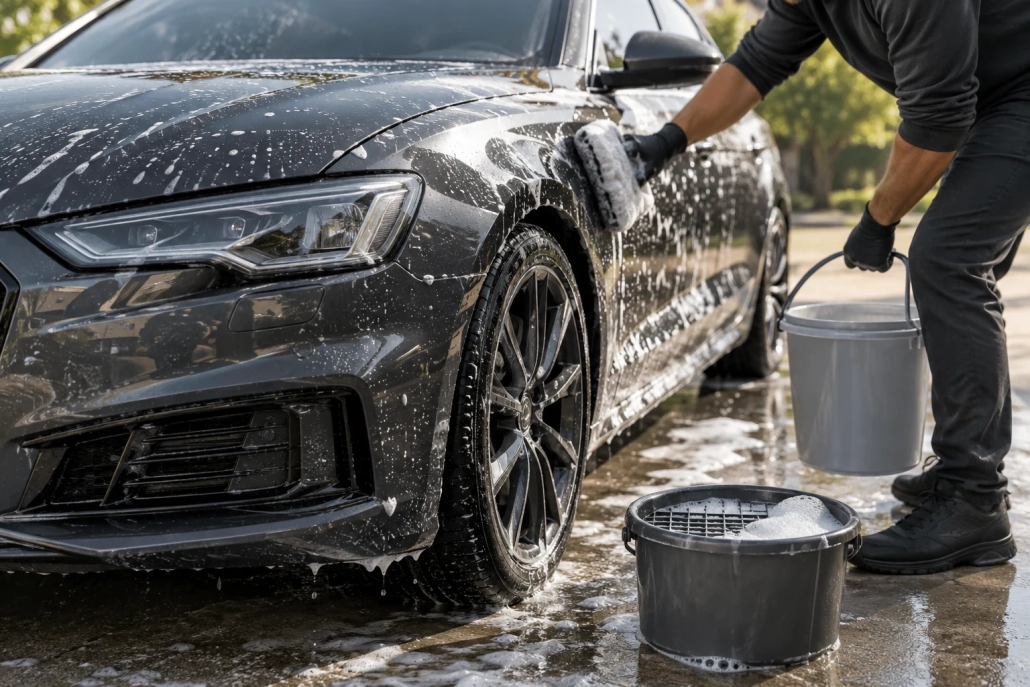
Build a gentle wash routine that removes loose grit before contact, keeps wheel tools separate and ends with careful rinsing and drying.
Uneven surface response can reflect local conditions as well as application technique. Record where the change occurs before altering the process.
Investigate patchy beading on a coated panel with a controlled cleaning comparison before adding a topper or assuming coating failure.

 Patchy Beading after a Wash: A Controlled Half-Panel Investigation