






A full polishing range.
From cutting and one-step correction to final finishing.
Specialist chemistry. Expert application.
 QUARTZ99 / CERAMIC BASE COAT
The foundation of your coating system.
A layerable quartz base coat designed for mechanical protection. Pair it with a suitable top coat to create the final finish.
For application by NANOLAB certified installers only.
Four formulas. Extended working time. Find the coating for your finish.
Explore the BEAST family of ceramic coatings.
Find the coating for each exterior surface.
 PPF & VINYLGLOSSProtection for glossy films and wraps.Discover
 MATTE & SATINMATTEProtection that respects the finish.Discover
 GLASSWINDOWSExplore dedicated glass protection.Discover
 WHEEL PROTECTIONWHEELSA dedicated coating for your wheels.Discover
 TRIM PROTECTIONPLASTICProtection for plastic surfaces.Discover
Dedicated care for the surfaces inside.
 LEATHER SURFACESLEATHERDiscover NANOLAB leather protection.Discover PLASTIC SURFACESPLASTICProtection for interior plastic surfaces.Discover TEXTILE SURFACESFABRICExplore the latest fabric formulation.Discover
Spray protection, maintenance and upcoming wash products.
 MAINTENANCEBEAST 365Explore the BEAST maintenance range.Discover
Next in washing, cleaning & care.
Ceramic protection for boats and yachts.
An easy-to-apply ceramic coating with an established track record on boats and yachts around the world.
Results vary with surface preparation, exposure and maintenance.
Read 50 MARINE guides →Explore MARINEProtection for the surfaces you live with.
A look at what we’re developing.
From cutting and one-step correction to final finishing.
A wider range for professional vehicle care.
Taking shape alongside BEAST & MATRIX.
Practical guidance for your next coating project.
Explore all guides →
Identify when iron decontamination is appropriate and how to manage compatibility, dwell time and rinsing before coating preparation.
Updated · NANOLAB Knowledge
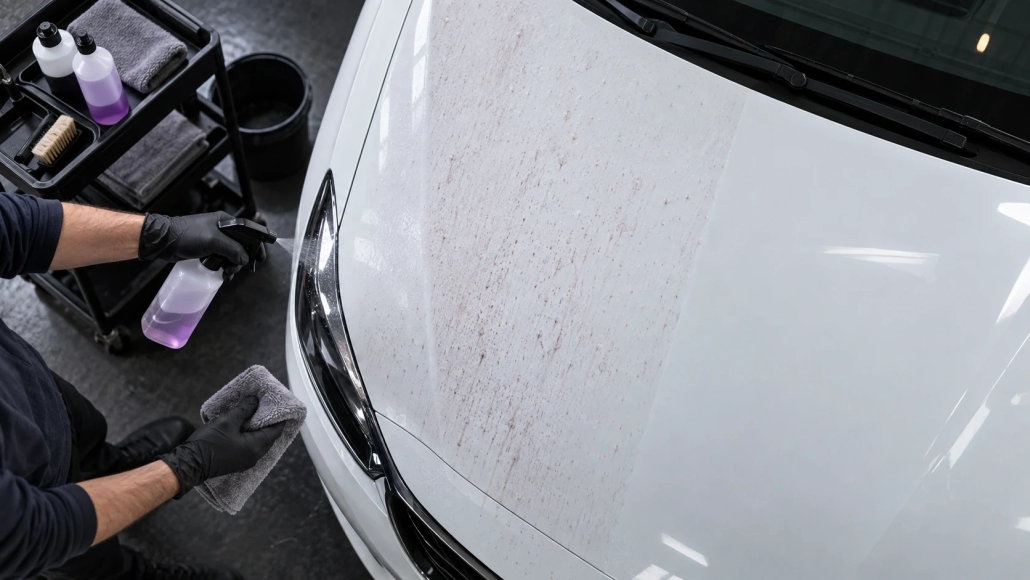
Iron-removal products are designed for certain iron-containing deposits, such as contamination associated with brake dust or transport exposure. They do not replace a normal wash and are not universal removers for every visible speck. Inspect the clean surface and establish why the treatment is needed.
A colour reaction can indicate the product is reacting, but it does not alone prove the panel is fully clean or that every remaining defect is removable contamination.
Check the cleaner’s compatibility with paint, trim, film and nearby sensitive components. Follow its dilution, temperature and dwell instructions. Work in conditions that allow thorough rinsing before the product dries. Avoid improvising chemical combinations to speed up the process.
Use a targeted test where compatibility or surface history is uncertain. Pay attention to seams and lower panels during rinsing, since retained cleaner can reappear during drying.
After rinsing and drying, reassess remaining roughness or spots. Tar, mineral deposits and paint damage may need a different process. Move to clay or polishing only when the condition justifies it. Before coating, complete the selected system’s final preparation so cleaner residues and any later polishing oils do not remain on the surface.
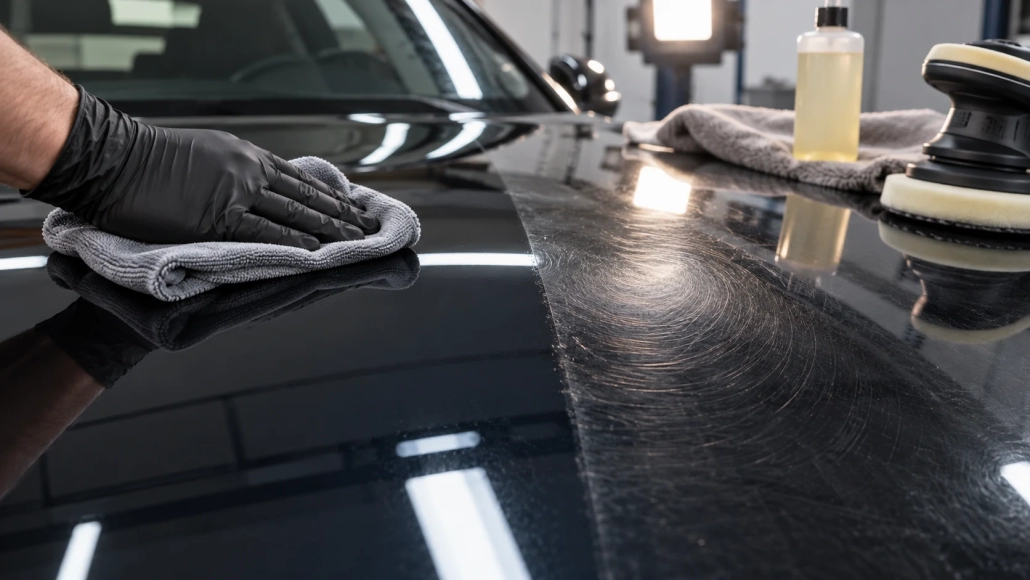
Inspect corrected paint after suitable residue removal to distinguish lasting defect improvement from temporary masking by polishing residue.
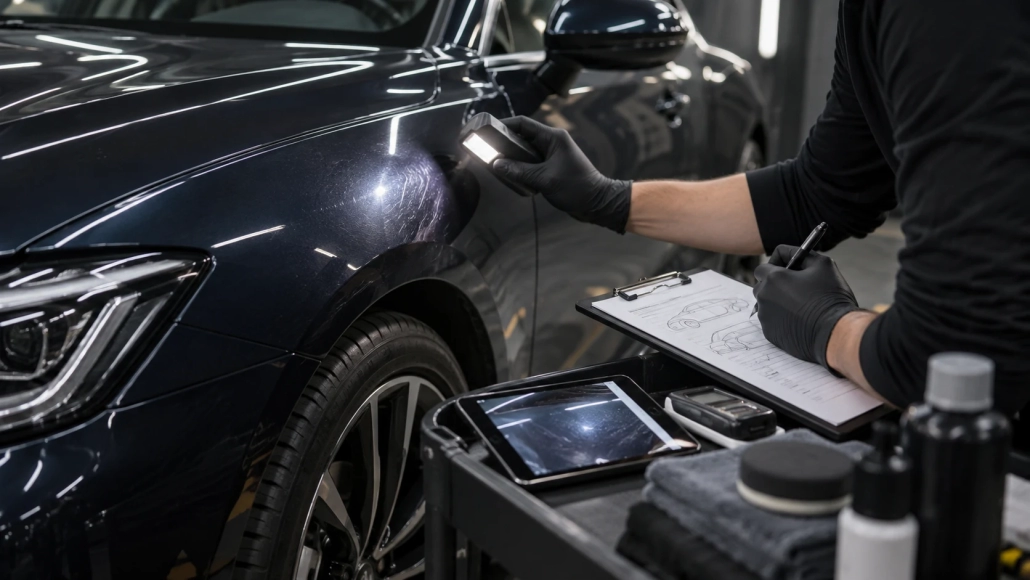
Create a useful record of paint condition, repairs and agreed correction limits before preparation and coating begin.
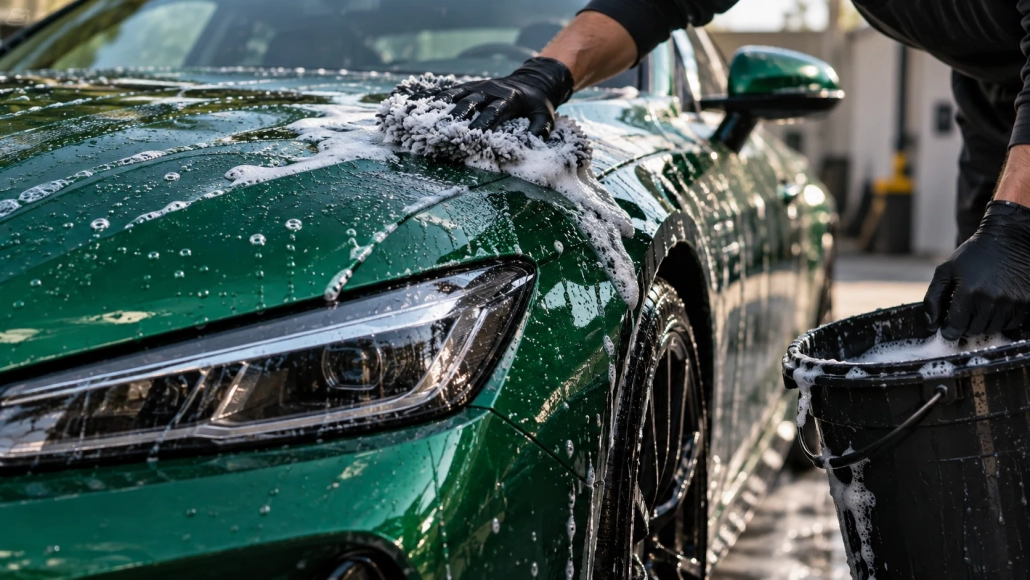
Learn how a preparation wash reveals surface condition and why extra gloss additives and unnecessary cleaning steps can complicate coating work.

 Ceramic Coating Working Time: Reading the Surface and the Instructions