






A full polishing range.
From cutting and one-step correction to final finishing.
Specialist chemistry. Expert application.
 QUARTZ99 / CERAMIC BASE COAT
The foundation of your coating system.
A layerable quartz base coat designed for mechanical protection. Pair it with a suitable top coat to create the final finish.
For application by NANOLAB certified installers only.
Four formulas. Extended working time. Find the coating for your finish.
Explore the BEAST family of ceramic coatings.
Find the coating for each exterior surface.
 PPF & VINYLGLOSSProtection for glossy films and wraps.Discover
 MATTE & SATINMATTEProtection that respects the finish.Discover
 GLASSWINDOWSExplore dedicated glass protection.Discover
 WHEEL PROTECTIONWHEELSA dedicated coating for your wheels.Discover
 TRIM PROTECTIONPLASTICProtection for plastic surfaces.Discover
Dedicated care for the surfaces inside.
 LEATHER SURFACESLEATHERDiscover NANOLAB leather protection.Discover PLASTIC SURFACESPLASTICProtection for interior plastic surfaces.Discover TEXTILE SURFACESFABRICExplore the latest fabric formulation.Discover
Spray protection, maintenance and upcoming wash products.
 MAINTENANCEBEAST 365Explore the BEAST maintenance range.Discover
Next in washing, cleaning & care.
Ceramic protection for boats and yachts.
An easy-to-apply ceramic coating with an established track record on boats and yachts around the world.
Results vary with surface preparation, exposure and maintenance.
Read 50 MARINE guides →Explore MARINEProtection for the surfaces you live with.
A look at what we’re developing.
From cutting and one-step correction to final finishing.
A wider range for professional vehicle care.
Taking shape alongside BEAST & MATRIX.
Practical guidance for your next coating project.
Explore all guides →
Separate protection requirements from appearance restoration decisions in the buying process.
Updated · NANOLAB Knowledge
Paint correction and coating selection answer different questions. Correction concerns assessed appearance issues and the work agreed to address them. Coating selection concerns a suitable protective treatment and its approved use. Keeping these decisions separate makes a quotation easier to understand.
Record the customer's priorities and inspect the relevant surfaces. Explain which marks require further assessment and what result is being discussed. Avoid promising a level of defect removal before the condition and treatment options are understood.
Identify finish type, repair history, film and existing treatments. Review the intended user's needs and current product information. A coating recommendation should not imply that the liquid will perform the separate work included in a correction service.
For example, a customer may choose a limited appearance enhancement followed by a suitable coating rather than a more extensive correction package. Record that choice and its limitations. The final proposal should identify preparation, agreed correction, protective application and care handover as understandable parts of one project. This helps prevent disappointment caused by expecting the coating itself to remove a defect or assuming that every coating package includes the same amount of appearance work. Each decision should be justified by the vehicle and the customer's goals.
First ask whether the proposed correction result and its limits meet the customer's appearance priorities. Then ask whether the selected protection suits the identified surfaces and care routine. Record both decisions before combining them in the final service scope.
A customer can reasonably accept some remaining defects and still choose an appropriate coating. Another may want more appearance work before deciding on protection. Do not use the coating's price or positioning to imply a particular correction standard. The two-question approach helps the workshop explain the service clearly and prevents disappointment when a customer expects the protective liquid itself to perform abrasive correction or repair existing damage.
Ask NANOLAB about the identified surfaces. For supporting information, review the current product documentation and the coating selection guides.
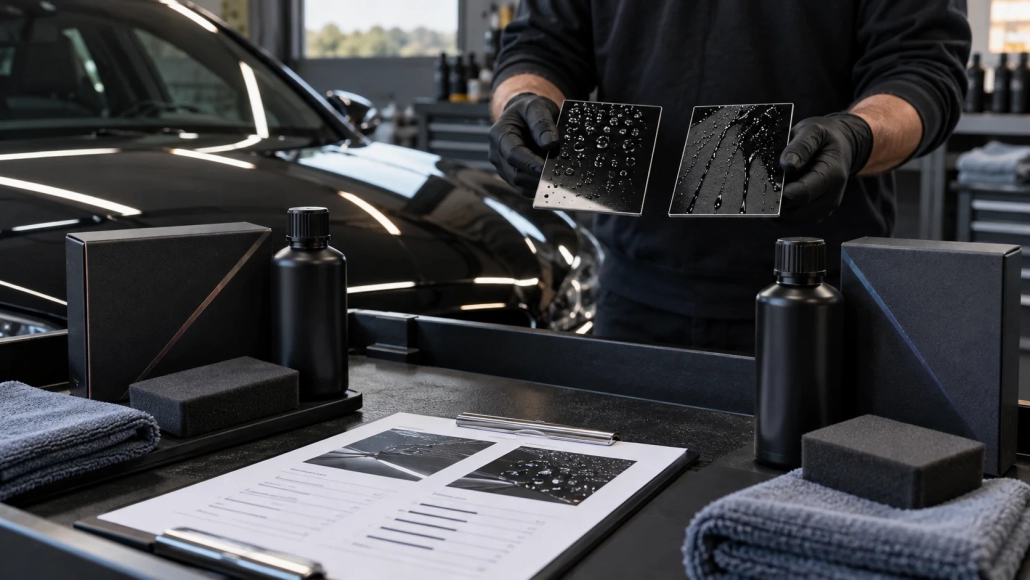
Compare NANOLAB coating families by surface compatibility, application workflow and installer requirements rather than treating the names as interchangeable.
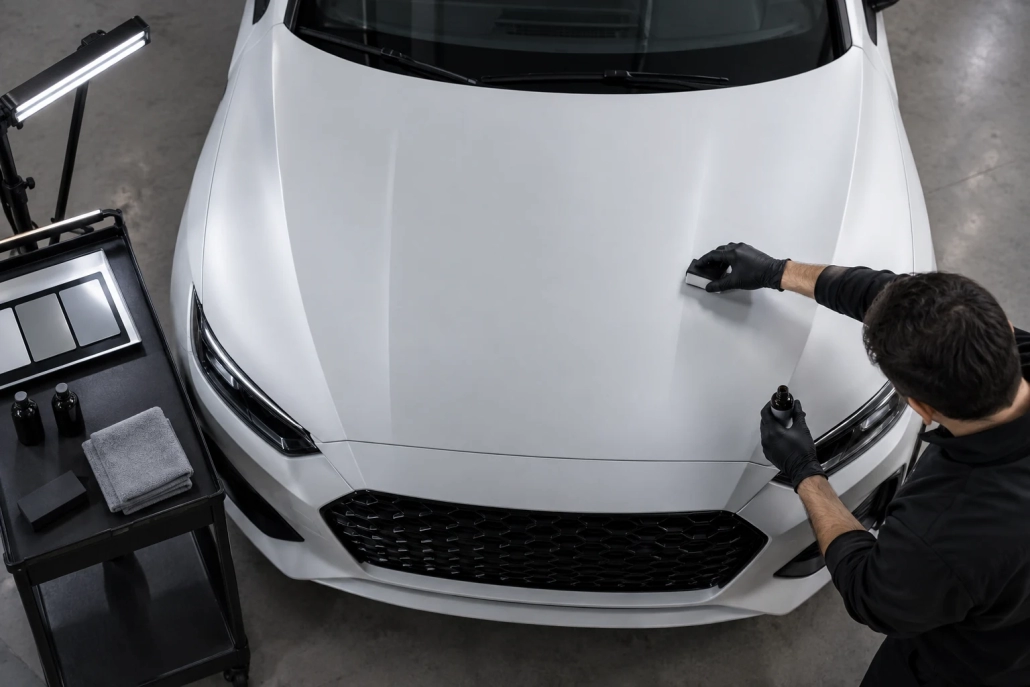
Choose a coating that preserves matte or satin appearance and avoid gloss-enhancing products or correction methods that change the sheen.
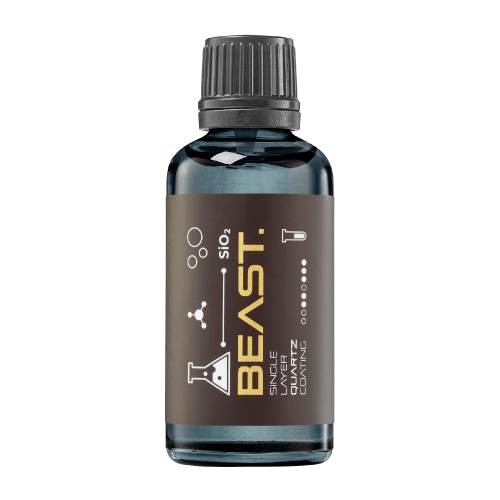
Account for inconsistent washing routines and handover communication in product discussions.