






A full polishing range.
From cutting and one-step correction to final finishing.
Specialist chemistry. Expert application.
 QUARTZ99 / CERAMIC BASE COAT
The foundation of your coating system.
A layerable quartz base coat designed for mechanical protection. Pair it with a suitable top coat to create the final finish.
For application by NANOLAB certified installers only.
Four formulas. Extended working time. Find the coating for your finish.
Explore the BEAST family of ceramic coatings.
Find the coating for each exterior surface.
 PPF & VINYLGLOSSProtection for glossy films and wraps.Discover
 MATTE & SATINMATTEProtection that respects the finish.Discover
 GLASSWINDOWSExplore dedicated glass protection.Discover
 WHEEL PROTECTIONWHEELSA dedicated coating for your wheels.Discover
 TRIM PROTECTIONPLASTICProtection for plastic surfaces.Discover
Dedicated care for the surfaces inside.
 LEATHER SURFACESLEATHERDiscover NANOLAB leather protection.Discover PLASTIC SURFACESPLASTICProtection for interior plastic surfaces.Discover TEXTILE SURFACESFABRICExplore the latest fabric formulation.Discover
Spray protection, maintenance and upcoming wash products.
 MAINTENANCEBEAST 365Explore the BEAST maintenance range.Discover
Next in washing, cleaning & care.
Ceramic protection for boats and yachts.
An easy-to-apply ceramic coating with an established track record on boats and yachts around the world.
Results vary with surface preparation, exposure and maintenance.
Read 50 MARINE guides →Explore MARINEProtection for the surfaces you live with.
A look at what we’re developing.
From cutting and one-step correction to final finishing.
A wider range for professional vehicle care.
Taking shape alongside BEAST & MATRIX.
Practical guidance for your next coating project.
Explore all guides →
Test preparation and controlled application on textured automotive plastic before extending ceramic coating across visible trim.
Updated · NANOLAB Knowledge
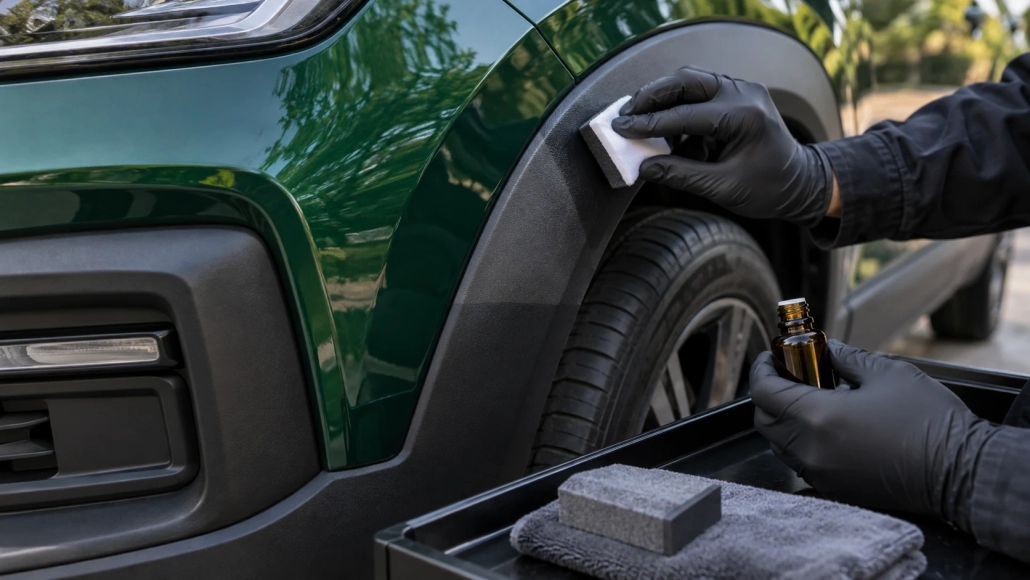
Textured plastic presents a different working surface from smooth glossy paint. Small recesses can retain dirt, cleaner and excess coating. Even when the selected product supports the material, application must allow an even result without filling the texture with residue.
Inspect for existing dressings, fading, damage and inconsistent colour. Clean with a process approved for the trim and allow it to dry as directed. Do not interpret a temporarily darker wet surface as proof that the original appearance has been restored.
If old dressing remains, reassess the cleaning method before coating. Repeatedly adding protection over an oily or patchy base can make the final result harder to evaluate.
Choose a small area containing the actual texture, not only a convenient smooth edge. Check product compatibility and observe how the approved applicator reaches the recesses. Confirm that the specified finishing or levelling process leaves no obvious accumulation.
NANOLAB PLASTIC is designed for supported plastic and rubber applications. Follow its current instructions for the exact surface. Do not transfer the timing or wiping technique from a paint coating by assumption.
View the finished trim from several angles and under normal daylight when practical. Compare adjoining pieces because their condition or material may differ. Do not promise an identical colour change across every moulding on an older vehicle.
Record the product and test result, then provide a compatible cleaning routine. If the trim is cracked or failing, distinguish cosmetic protection from repair. Careful selection and a controlled amount of material are more useful than describing heavy application as ‘deep protection’.
Assess plastic type and condition, remove old dressing appropriately and test for even appearance before coating textured trim.
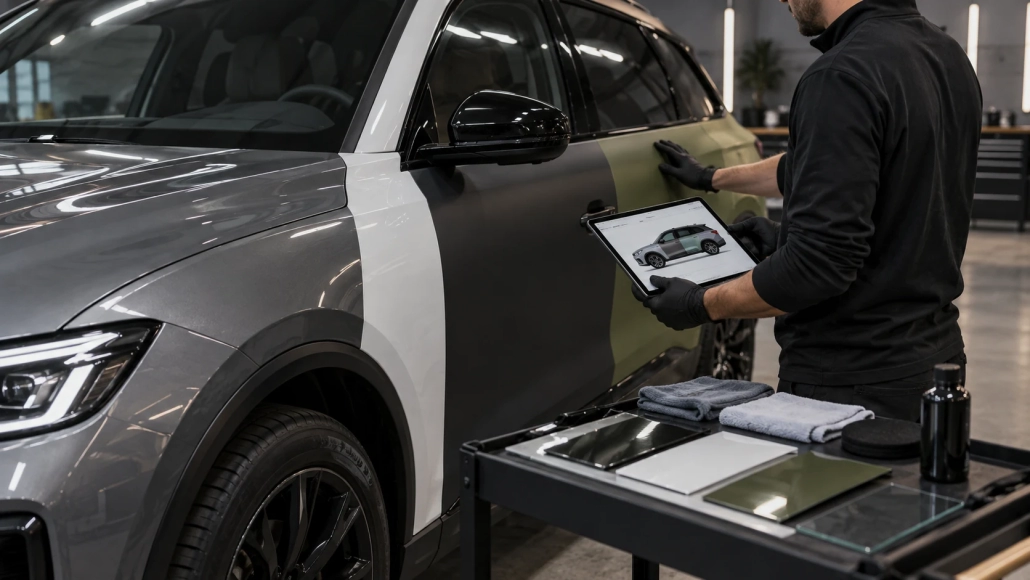
Check fragile interior surface finishes before applying cleaners or protective coatings to soft-touch trim.
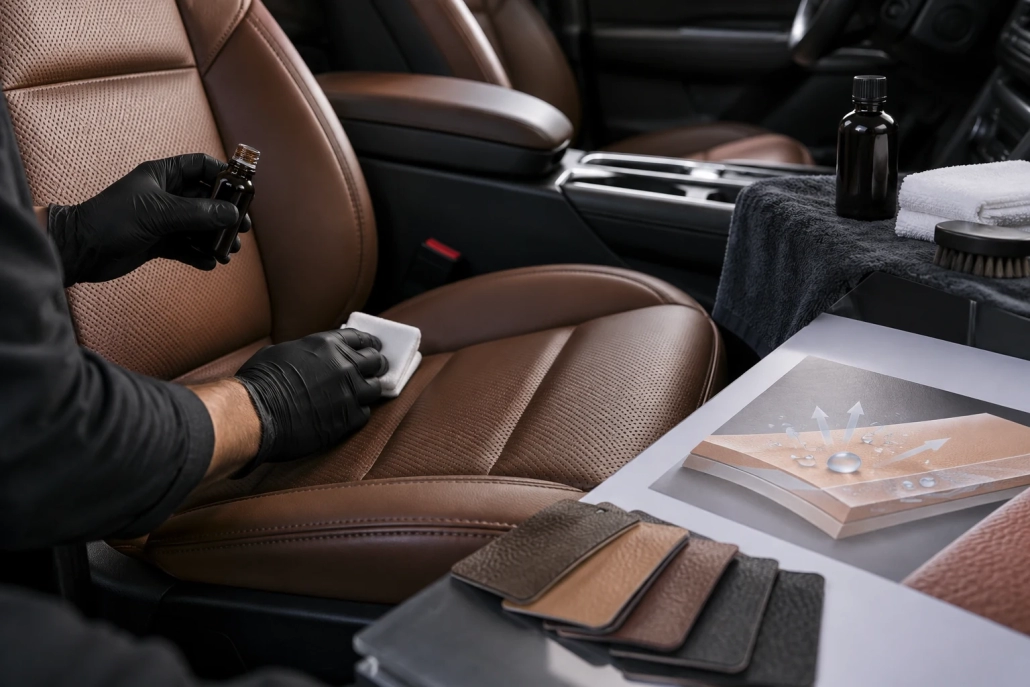
Plan leather protection around perforations, seams and seat features while preventing excess liquid from entering openings.
 Ceramic Coating on Soft-Touch Interior Trim