






A full polishing range.
From cutting and one-step correction to final finishing.
Specialist chemistry. Expert application.
 QUARTZ99 / CERAMIC BASE COAT
The foundation of your coating system.
A layerable quartz base coat designed for mechanical protection. Pair it with a suitable top coat to create the final finish.
For application by NANOLAB certified installers only.
Four formulas. Extended working time. Find the coating for your finish.
Explore the BEAST family of ceramic coatings.
Find the coating for each exterior surface.
 PPF & VINYLGLOSSProtection for glossy films and wraps.Discover
 MATTE & SATINMATTEProtection that respects the finish.Discover
 GLASSWINDOWSExplore dedicated glass protection.Discover
 WHEEL PROTECTIONWHEELSA dedicated coating for your wheels.Discover
 TRIM PROTECTIONPLASTICProtection for plastic surfaces.Discover
Dedicated care for the surfaces inside.
 LEATHER SURFACESLEATHERDiscover NANOLAB leather protection.Discover PLASTIC SURFACESPLASTICProtection for interior plastic surfaces.Discover TEXTILE SURFACESFABRICExplore the latest fabric formulation.Discover
Spray protection, maintenance and upcoming wash products.
 MAINTENANCEBEAST 365Explore the BEAST maintenance range.Discover
Next in washing, cleaning & care.
Ceramic protection for boats and yachts.
An easy-to-apply ceramic coating with an established track record on boats and yachts around the world.
Results vary with surface preparation, exposure and maintenance.
Read 50 MARINE guides →Explore MARINEProtection for the surfaces you live with.
A look at what we’re developing.
From cutting and one-step correction to final finishing.
A wider range for professional vehicle care.
Taking shape alongside BEAST & MATRIX.
Practical guidance for your next coating project.
Explore all guides →
Consider panel temperature, cleaning instructions and rapid drying when choosing water conditions for washing a ceramic-coated vehicle.
Updated · NANOLAB Knowledge
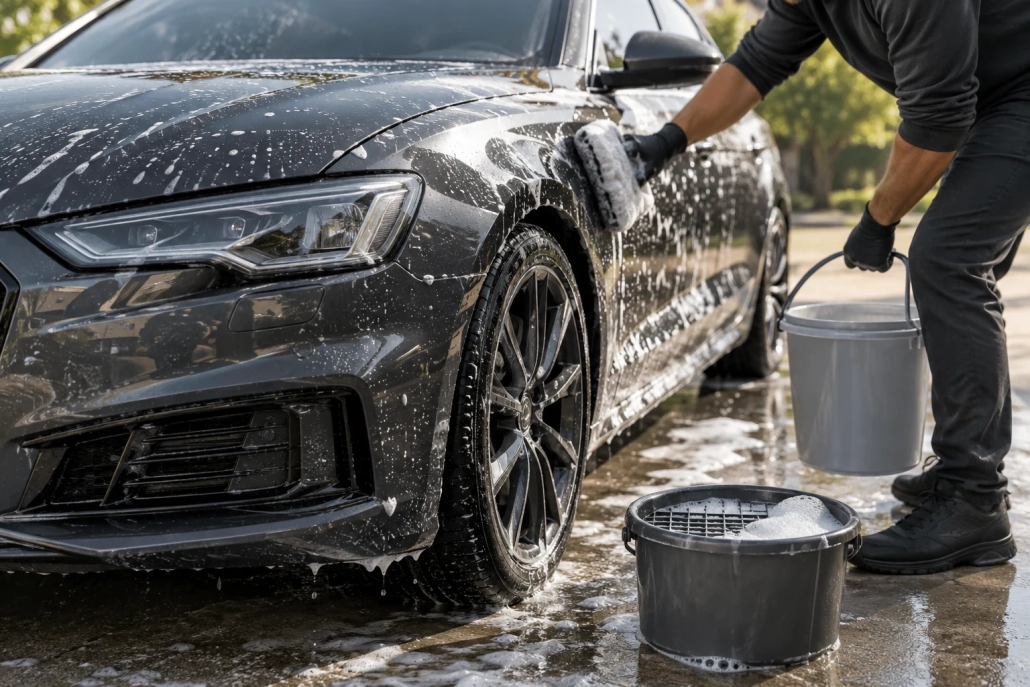
Wash-water temperature should be considered alongside panel temperature and the cleaner’s instructions. ‘Hotter cleans better’ is not a complete maintenance rule for ceramic coating. The surrounding materials, coating condition and drying rate all matter.
Avoid starting a wash on panels that are outside the cleaning product’s permitted conditions. A car recently parked in sun may need time in a suitable shaded location. Check glass, trim and paint separately where their exposure differs.
Use the wash product at the temperature and dilution it supports. Do not improvise with very hot water to remove bonded contamination or to speed up cleaning. Temperature changes can introduce concerns that a coating is not designed to solve.
Warm conditions can make cleaner and rinse water dry sooner, so plan the wash around actual conditions. Rinse before the product dries as directed and avoid covering more of the car than you can control. Thorough rinsing matters even when the water feels pleasantly warm.
For a cold-weather wash, ensure that the location and drying plan remain suitable throughout the job. Do not begin a process that leaves water freezing around components or access routes. Postpone the wash when conditions cannot be managed appropriately.
If a film remains, assess the contamination and cleaner rather than repeatedly increasing water temperature. Use the approved targeted process for the identified problem. Check the dry finish before applying a maintenance layer.
NANOLAB documentation provides the product-specific reference for care. A consistent routine records the conditions that matter, uses compatible cleaning and ends with controlled drying, instead of treating water temperature as a standalone indicator of wash quality.
Build a gentle wash routine that removes loose grit before contact, keeps wheel tools separate and ends with careful rinsing and drying.
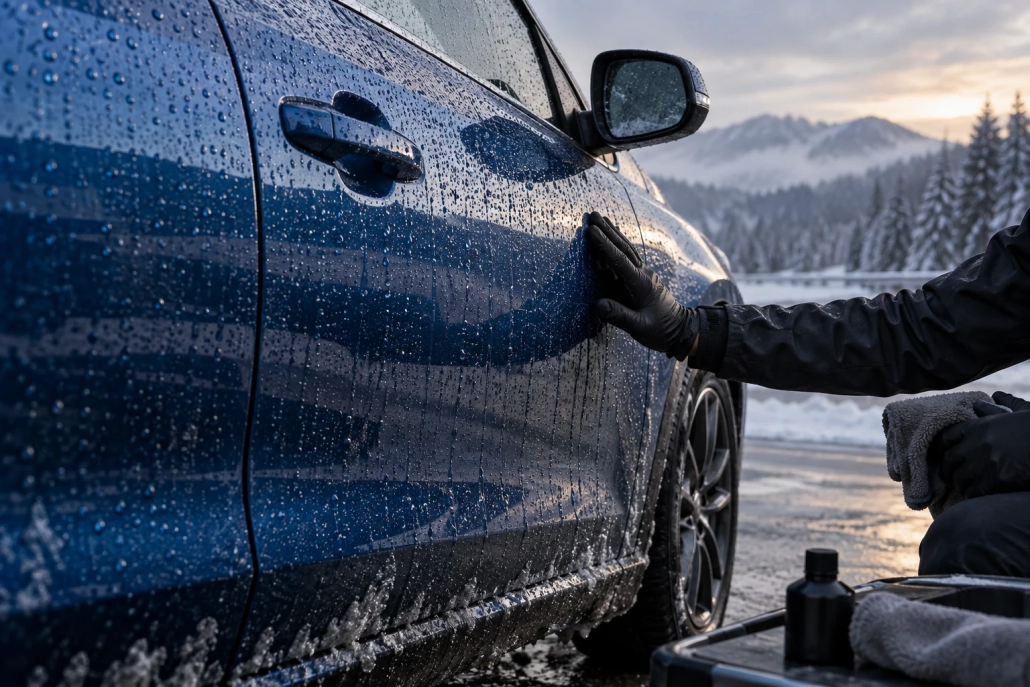
Plan cleaning after sustained road spray by separating loose dirt, traffic film and bonded contamination on ceramic-coated paint.
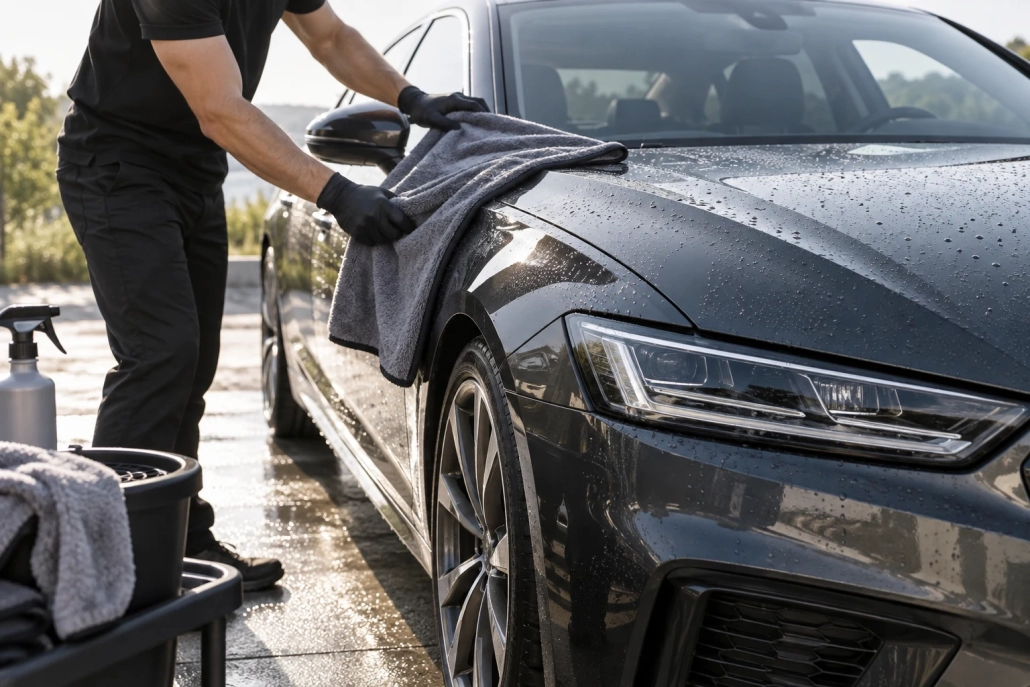
Prepare enough water and a workable stop plan before a maintenance wash, and respond carefully if the rinse supply fails.

 Ceramic Coating Care: Cleaning a Wash Mitt’s Seams