

Ceramic Coating Thickness: Microns, Measurement and Myths
There is no universal ceramic coating thickness in microns that applies to every product. The final cured film depends on the formulation, application, levelling, surface and cure. A bottle’s solids percentage or a “nano” label is not a measurement of the layer left on a vehicle.
A useful numerical claim identifies the exact product, whether the measurement concerns wet or cured film, the method used and the application conditions.
Wet film, cured film and paint thickness are different
| Measurement | What is being measured? | Why the distinction matters |
|---|---|---|
| Wet-film thickness | The liquid film before its specified drying or curing process. | Liquid dispensed onto an applicator is not necessarily all retained on the panel. |
| Cured-film thickness | The film remaining after the defined cure. | Levelling and changes during drying or cure mean this is not simply the original wet amount. |
| Total paint/coating stack | The combined layers detected above the substrate by a suitable gauge. | An overall reading does not necessarily isolate the ceramic coating or even the clear coat. |
One micrometre (µm), also called a micron, is 0.001 millimetre. Material features described as nanoscale and the thickness of the entire finished coating are separate concepts. Read nano vs ceramic coating terminology.
Why application volume is not a cured-thickness specification
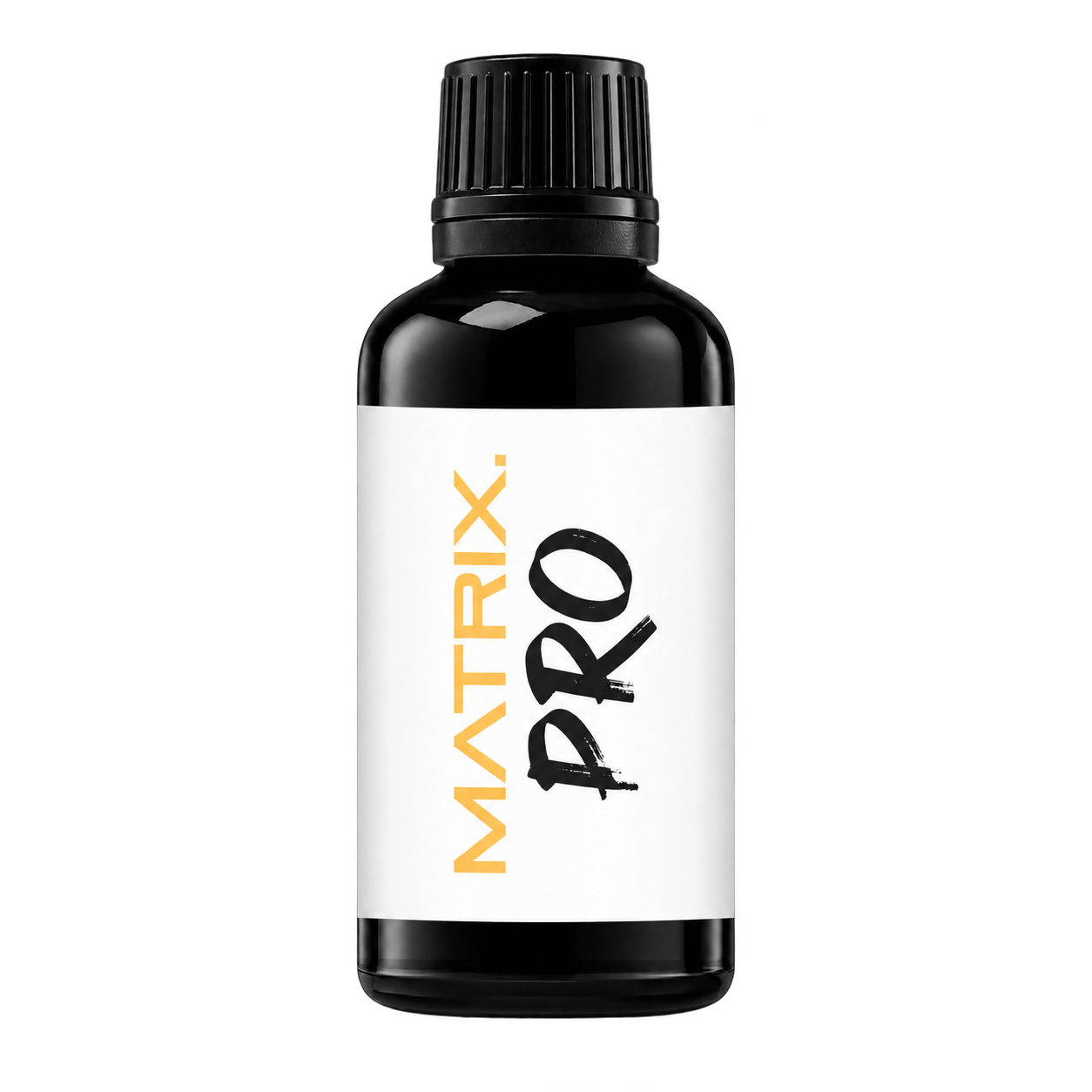
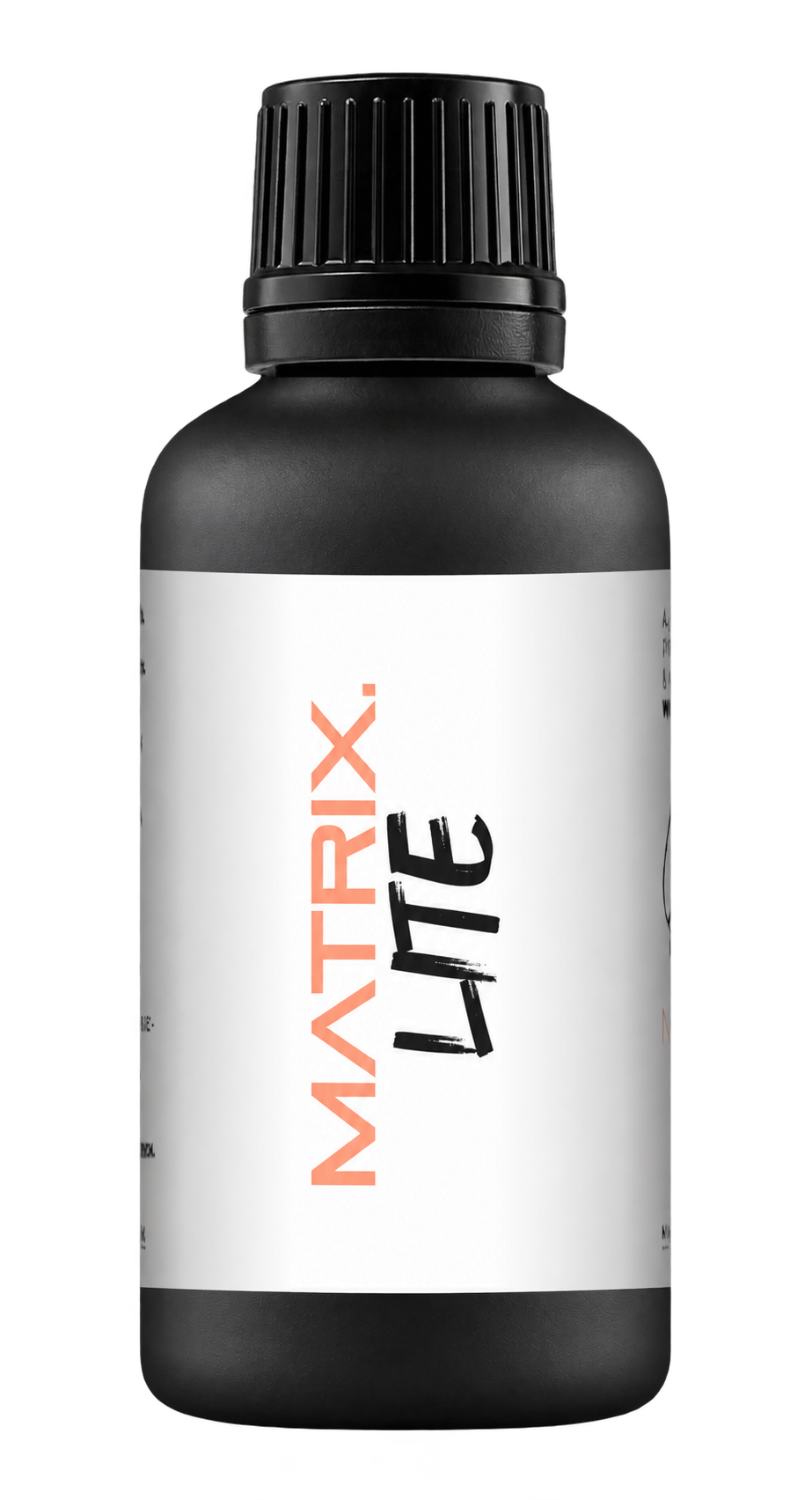
The MATRIX PRO product page gives approximate consumption guidance of 2 ml/m². That helps plan material use; it is not a certified dry-film thickness.
A geometry example: if exactly 2 ml of liquid were retained uniformly over exactly 1 m², the wet layer would be 2 µm thick. This assumes all of that liquid remains on the measured area. Real application includes material in the applicator, material removed during levelling and changes during drying and cure. The calculation therefore does not establish that MATRIX PRO, or another coating, leaves a 2 µm cured film.
Likewise, solids content alone cannot turn a consumption estimate into a reliable cured-film measurement. The definition of the solids measurement, material properties, retained amount and test conditions matter.
Can a paint thickness gauge measure ceramic coating?
Many common automotive paint gauges measure the overall coating stack above a metal substrate. They may not distinguish its individual layers. The small change being investigated can be obscured by variation in measurement position, substrate and instrument uncertainty.
Do not subtract two casual before-and-after readings and present the result as a precise ceramic-film thickness. A defensible assessment needs an appropriate method, representative samples, repeatable measurement locations and documented uncertainty. Ask what the equipment actually measures before relying on its displayed resolution.
Is a thicker coating always better?
No single thickness value establishes gloss, adhesion, chemical resistance, scratch resistance or service life. Each property needs evidence relevant to the product and use. Adding excess material can also make levelling more difficult; it is not a substitute for following the application instructions.
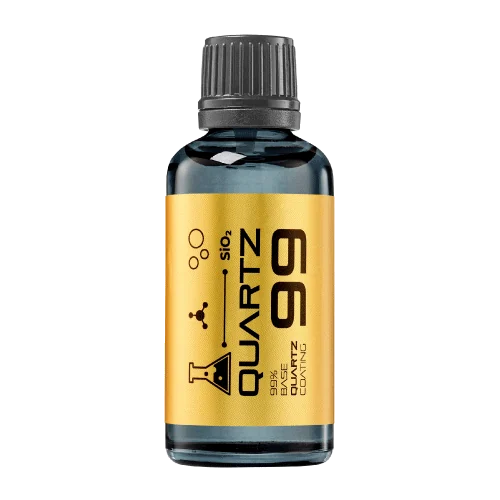
An additional wet coverage pass is not automatically a second independent cured layer. For multi-product systems, confirm the roles, compatibility and recoating intervals. A base coat such as QUARTZ99 has a different role from a hydrophobic top coat; see the QUARTZ99 system guide.
What to ask before accepting a thickness claim
- Which exact product and substrate were tested?
- Does the number describe wet film, cured film or the full coating stack?
- Which measurement method and equipment were used?
- How were application, levelling and cure controlled?
- How many samples were measured, and what variation or uncertainty was reported?
Frequently asked questions
Does “nano ceramic” mean the whole coating is less than 100 nm thick?
No. A product description does not establish the thickness of its cured layer. A thickness claim needs its own measurement evidence.
Does higher solids content prove a thicker finished layer?
No. Solids content is a formulation characteristic under a defined method. It does not, by itself, measure the amount retained on a particular surface after application and cure.
Should I choose a coating only by thickness?
Compare compatible surfaces, finish, application workflow, curing requirements and documented performance. Thickness is one possible specification, not a complete product-selection rule.
Read the current NANOLAB product documentation or request product-specific technical guidance. If you are developing a branded range, discuss the specifications and evidence required for your market through NANOLAB Private Label & OEM.